An emotional barometer: what Jill Orr’s work reveals about place, presence and architecture
22 October 2026
Jill Orr is one of Australia’s pre-eminent performance and installation artists, recognised and represented in major collections here and internationally. Through powerful site-specific actions and potent visual imagery, her work interrogates relationships between people, place and the environment.
At ARM’s October Cultural Conversation, Jill presented Questions That Persist to an audience of colleagues, artists, creative thinkers and members of the built environment.
A body lies prostrate among fish, bread and seagulls on St Kilda Beach. A woman trudges across a salt lake beneath an oversized cross and carries a flaming parasol across a mountain of dirt. A skeleton boat that can’t float travels from Melbourne to Venice.
In Jill Orr’s work, the images are uncanny, disturbing and mysterious, yet very beautiful. They prompt us to wonder where we are in time and space and to ask what is being demanded of us as we view them.
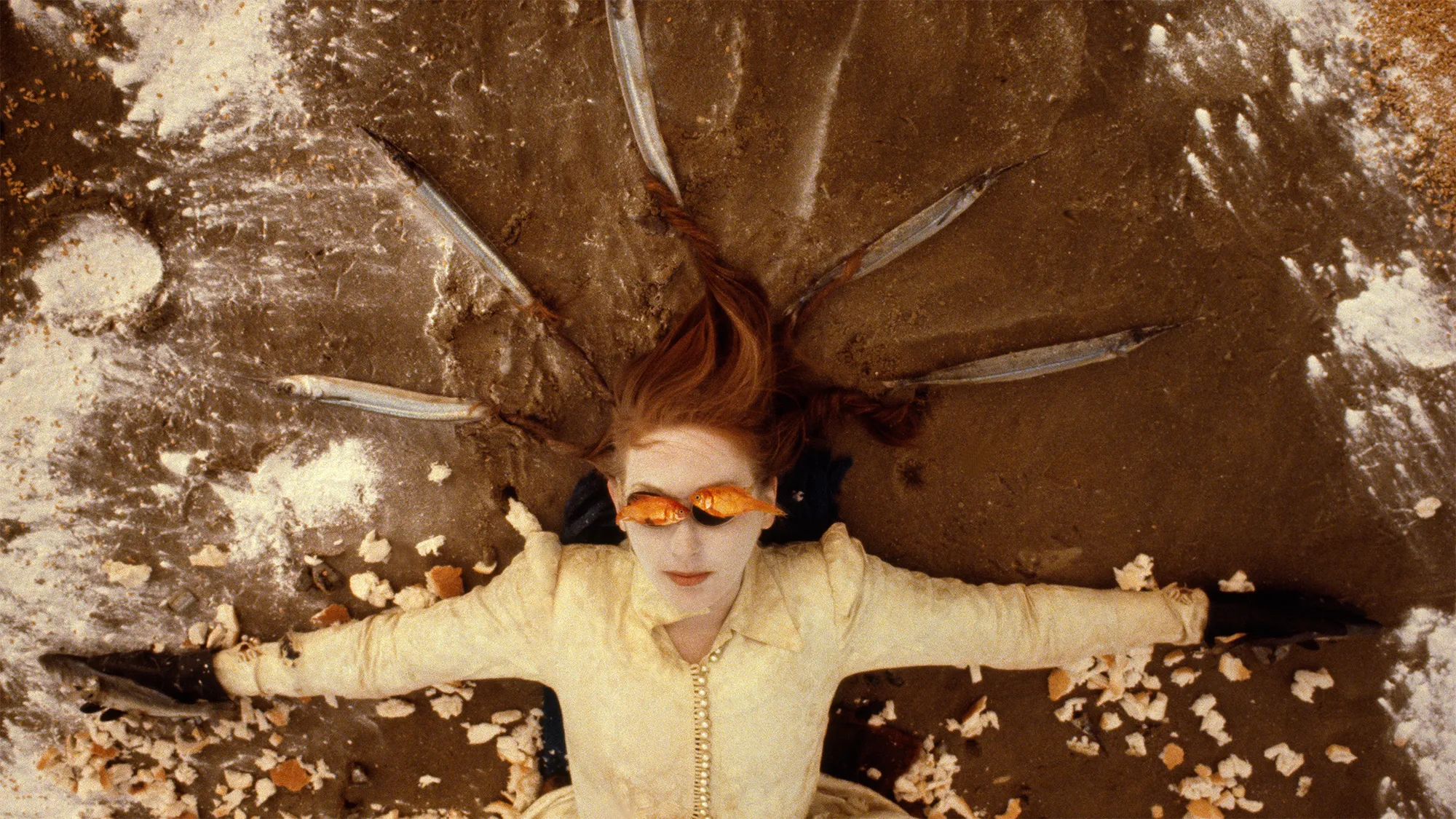
Jill Orr: Lunch with the Birds, 1979. Photographed by Elizabeth Campbell.
With selected works writ large on the huge screen in our Melbourne studio, Jill traced more than forty years of practice through questions that continue to stir and command her attention: what people bring to a place, what has occurred before, and what the land may be telling us now.
Jill is not just a performance artist creating complex narratives, but a sparkling storyteller. She brings humour and delight to the telling of her creative output. Each project is political and poetic, with a remarkable and often intrepid backstory to its creation. They emerge as complex combinations of imagination, location, costuming, dance, photography and logistics. Each work was unfolded not just as a serious artistic enquiry, but as an adventure in its own right.
In conceiving her works, Jill described exercising an “imaginary muscle”, where an idea arrives like a still photograph, held until she can perform it with the accuracy she first saw in her mind. Her works are typically “performances for the camera”, and are far from solitary endeavours, depending on photographers, technicians, makers, farmers, port crane operators and audiences. While the artist sets the framework, what happens next can still surprise her.
Jill took us on a chronological tour of her work starting in 1979 with Bleeding Trees. She used her own naked body as an “emotional barometer” to register the life cycle of trees, many of which had died naturally and others that had been killed.
A woman carrying a burning parasol presages a warming climate in Walking on Planet Earth (1989) and then she reappears, persistently (inconveniently), over time and in different landscapes, the parasol even more engulfed in flames. Her early focus on climate change and environmental threat was prescient. These works emerged as environmentalism was entering the mainstream. Looking back, she connects them to questions in her later work: how a settler might have understood their place on Indigenous land, and how the accelerating effects of climate change alter that relationship.
At a salt lake near Mount Arapiles in northwestern Victoria, the patterns of farming sit over a landscape carrying the presence of the Wotjobaluk people. Bringing her own colonial and mining ancestry into the scene, The Missionary (2009) bears an oversized wooden cross and an uncomfortable tension: a person trying to locate herself and her heritage in a place that can’t be claimed just by standing in it.
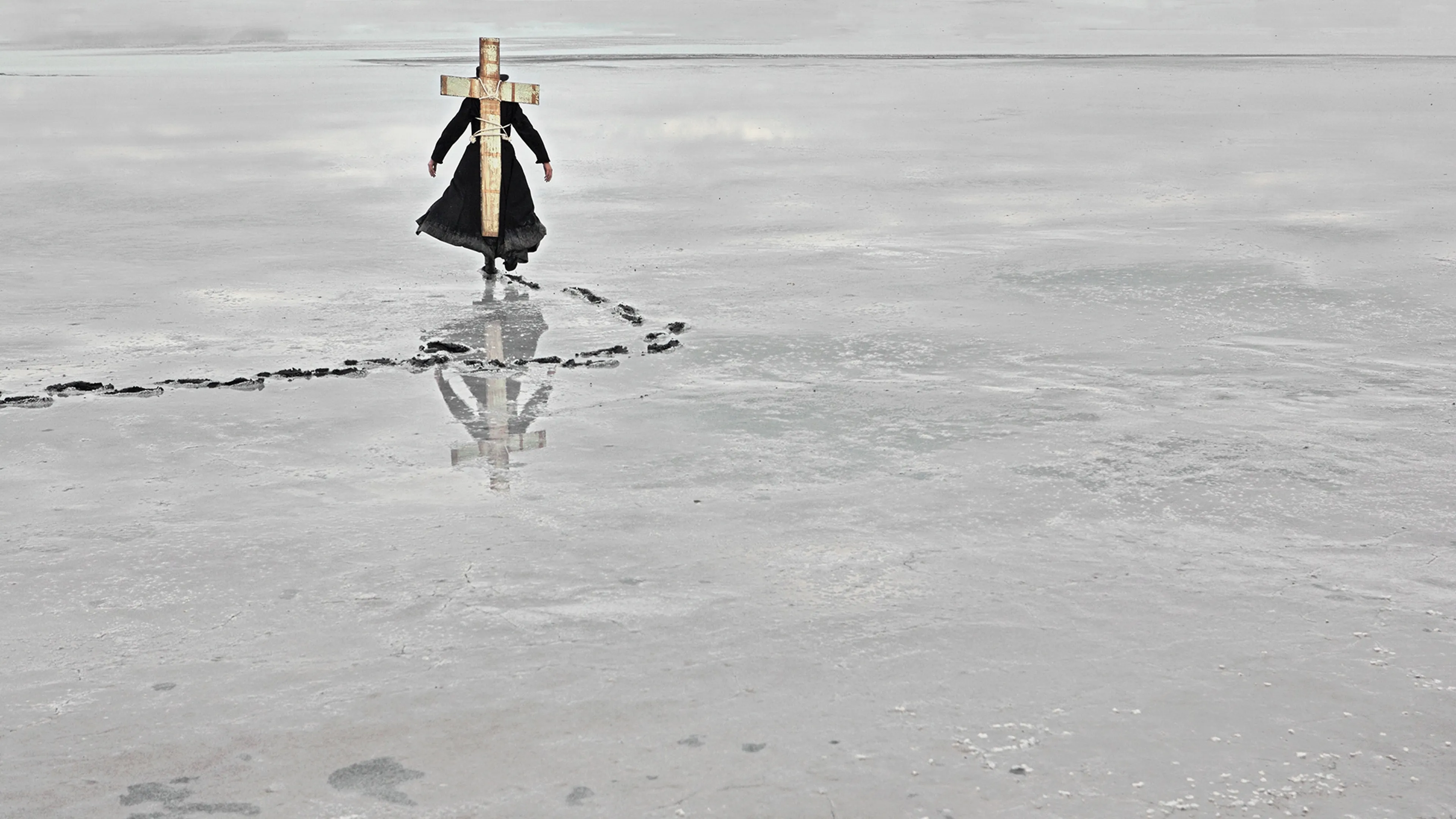
Jill Orr: Southern Cross to Bare and Behold, 2009. Photographed by Pete Brownstein and Naomi Herzog.
Jill’s performances make time visible. For The Promised Land (2012), a boat prop assembled with ARM’s help evoked the experience of sea arrivals and the way refugees can be reduced to numbers without identities. Its journeys, including its passage through Melbourne and Venice, connected present-day migration to changing histories of arrival. Rivers shift, places are redeveloped and the meaning of a landscape changes; yet places remain recognisable. As Jill recalled, a historic photograph taken where the Heidelberg School painters worked and her own image of the Yarra, made independently a century later, met at the same place, separated by time but recognisably connected.
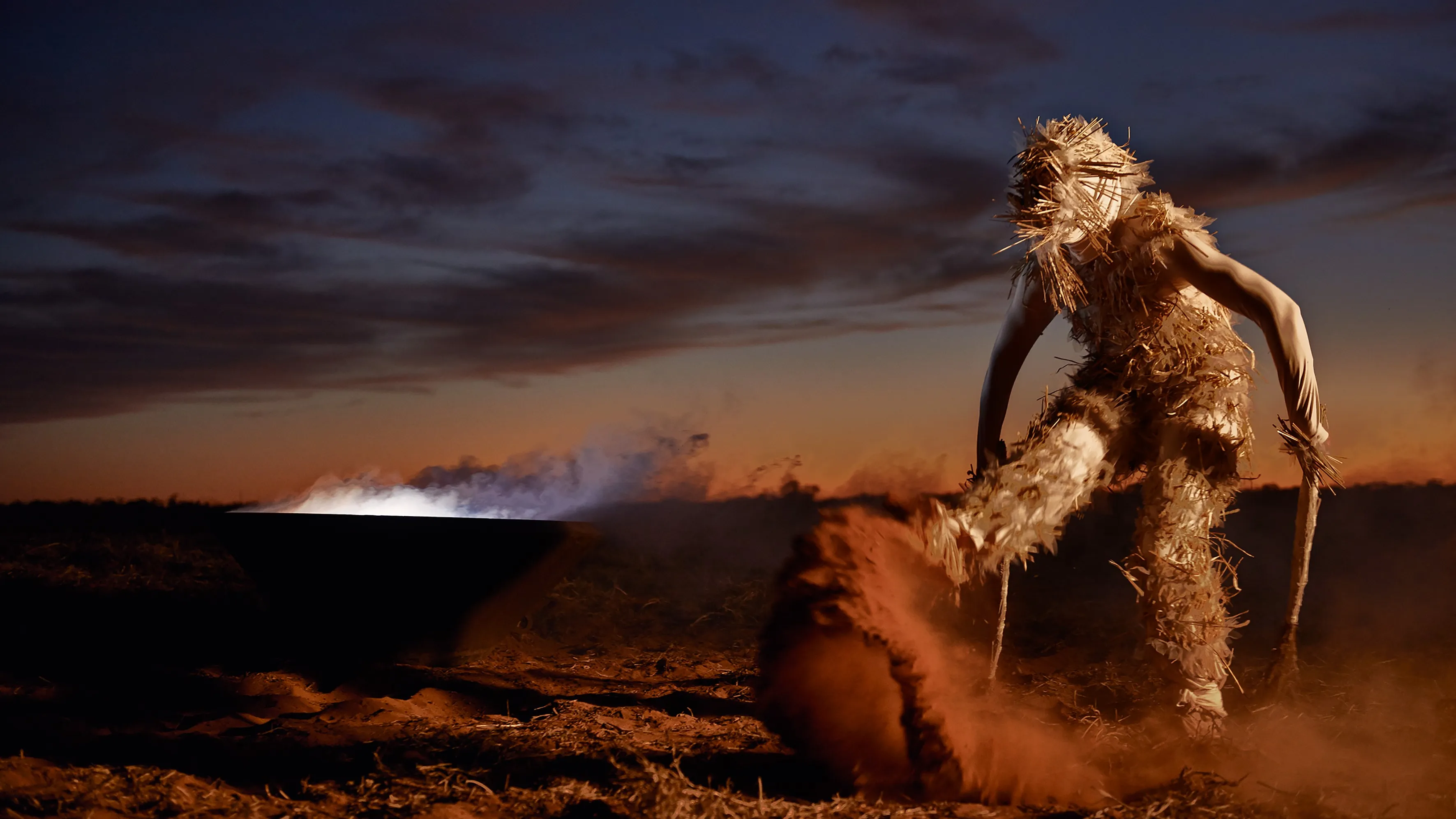
The audience, too, can become part of the landscape. In Antipodean Epic, two figures emerged from the wheat country: one beneath a cascade of seed, another formed from straw. In a disused building in Mildura, the performance drew an audience through darkness and sound ending with people lying together on a circle of wheat beneath the night sky. The work moved from unease towards a shared, bodily and wondrous experience of place.
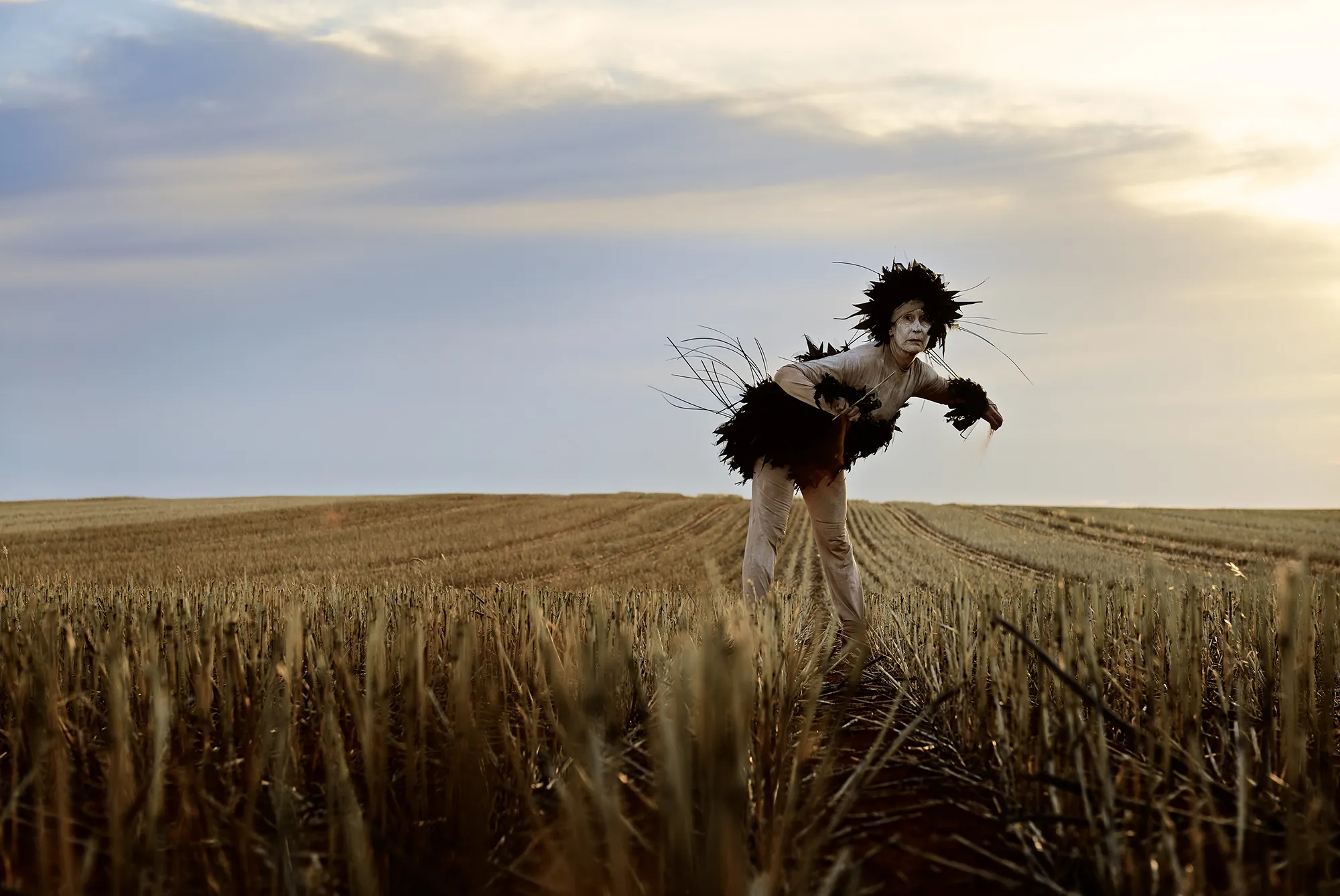
Jill Orr: Antipodean Epic, 2015-2016. Photographed by Christina Simons.
Many of the works are conceived as performances for the camera, realised through close collaboration with photographers, most recently Christina Simons and previously Elizabeth Campbell, Virginia Fraser, Bruce Parker and Joanne Allsop, Pete Brownstein and Naomi Herzog. While Jill brings a precise vision to each work, its realisation also depends on the contributions of others and the unpredictable conditions of each location.
Jill’s work resonates with ARM’s approach to architecture. Our work begins with cultural research and collaboration, exploring how buildings can respond to history, place, use and identity. This provides meaningful ways to shape and challenge how people experience their surroundings. Similarly, Jill’s performances draw on history, landscape and human presence. They are carefully conceived yet open to the unexpected, shaped by collaborators, audiences and the places in which they unfold. Jill’s practice reminds us that these are lived questions.
It’s this interest in how people experience a place that connects Jill’s work with ours here at ARM. We were honoured, challenged and delighted to have her as our guest.
Lucy Carruthers is ARM’s managing principal and chief operating officer. Equally at home discussing design ambition or organisational strategy, she upholds ARM’s tradition of over 25 years of provoking, reflecting, and refracting culture through architecture and writing.