Designing against isolation: what Elizabeth Quay can teach us about public space
17 November 2026
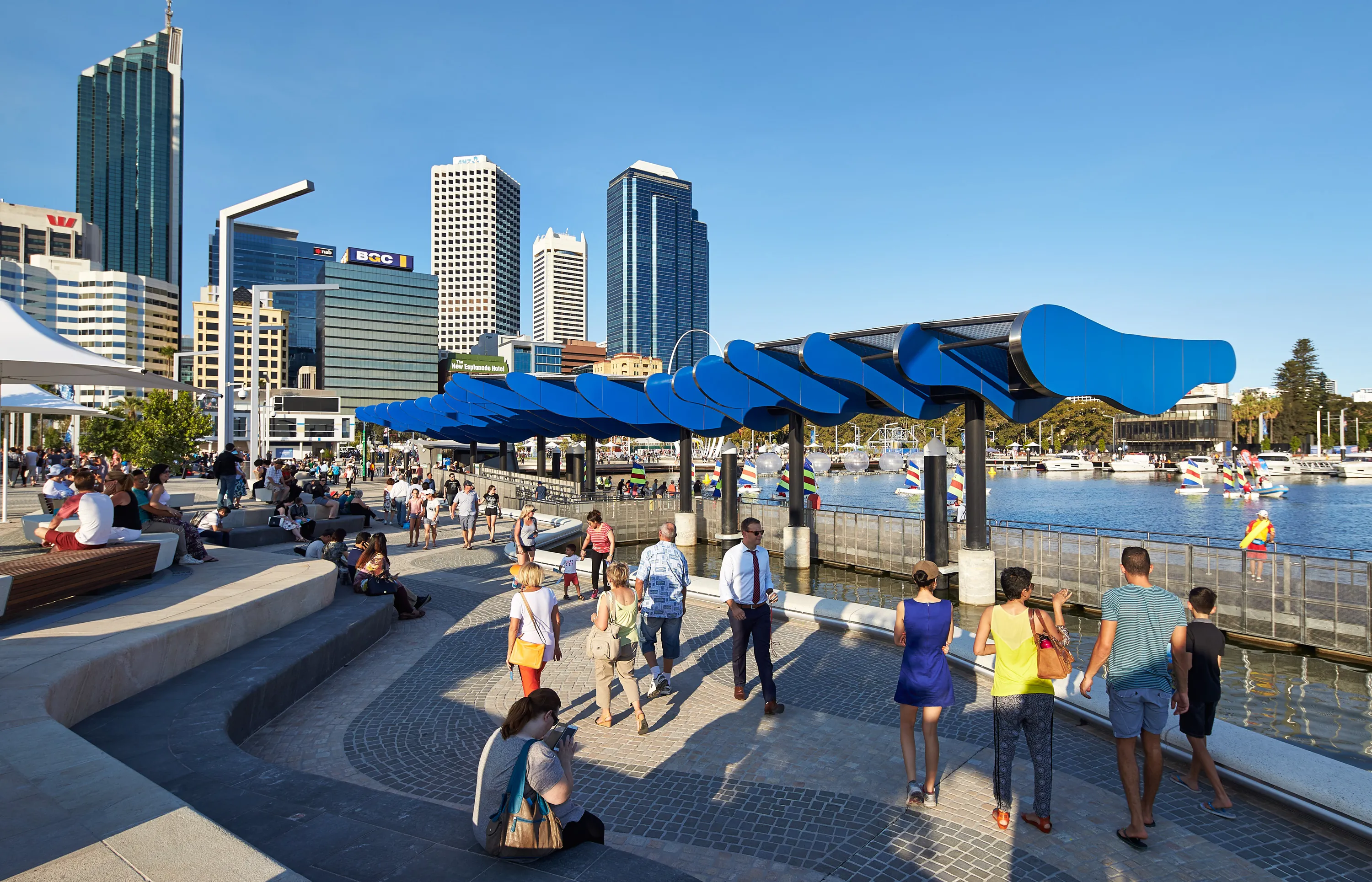
Social isolation is usually discussed as a problem of relationships. Researchers Katherine Vernot-Jonas and Maggie Szabo look at another part of the picture: the places where people might meet, linger and take part in public life. Their case study, Elizabeth Quay in Perth, asks what urban planning and waterfront design can do to make those encounters more likely.
You can’t design a conversation, but you can design the conditions for one. Bring people together, make it easy to stay, and let incidental encounters happen. Over time, a shared address becomes a shared experience, which is the paper’s central proposition: public space can work as social infrastructure, supporting connection through the ordinary ways people use a place.
The authors studied Elizabeth Quay through quantitative observation and spatial analysis. Across ten site visits and seven observation points, they examined how people used the space and how its design and planning shaped opportunities for interaction. They looked at walkability, mixed uses, public art, cultural programming, green and blue infrastructure, intergenerational activities and cross-sector partnerships.
Their analysis turns attention from the waterfront’s appearance to the choices it makes possible. Can people get there and move around easily? Is there a reason to stop? Can different visitors find something to do, whether that means playing, being active, encountering art or joining a cultural event? These features can bring different people into the same public setting and make staying there part of the experience.
Which changes how we measure success. Architecture and visitor numbers can tell us whether a place is striking or popular. They cannot, by themselves, show whether people feel able to use it, join in or share it with others. The authors argue for assessing public space by the everyday activity it supports: movement, lingering, play and informal interaction.
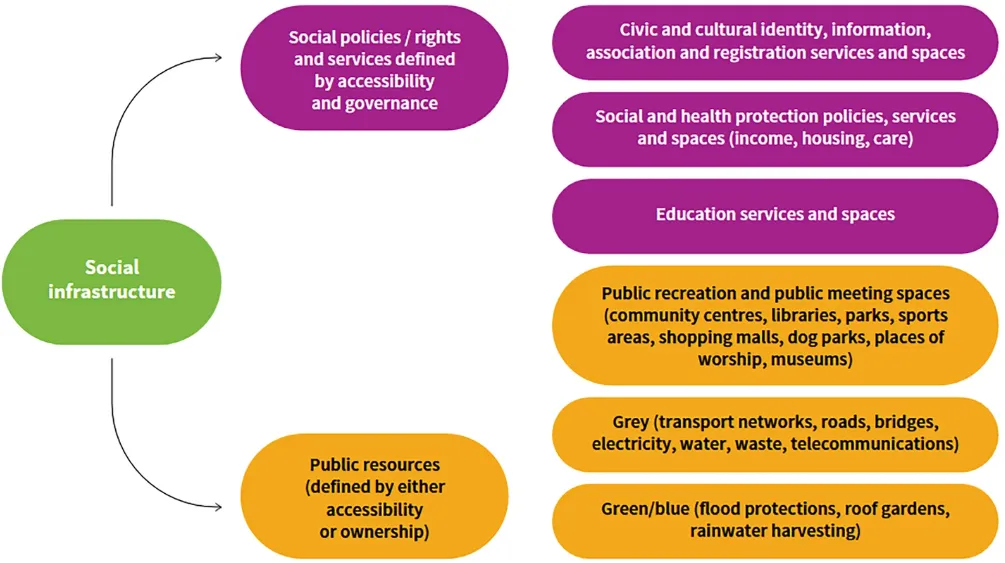
Typology of social infrastructure. Attribution: World Health Organization (2025). From loneliness to social connection: charting a path to healthier societies: report of the WHO Commission on Social Connection. World Health Organization.
The paper links these conditions to possible wider benefits, including a stronger sense of safety, social cohesion, inclusion, civic identity and wellbeing. But it draws a careful line between opportunity and outcome. The researchers observed spatial and behavioural patterns; they didn’t measure whether Elizabeth Quay reduces loneliness or prove that its design creates stronger social ties. Those effects remain possibilities suggested by the analysis, not demonstrated results.
That distinction makes the study’s contribution more useful, not less. A public space cannot solve the causes of isolation on its own. But planning can decide whether a place is accessible, comfortable to stay in and active across different ages and interests. Partnerships, programming and ongoing management help determine whether those design opportunities are used and sustained.
Elizabeth Quay gives planners a way to ask sharper questions of waterfront redevelopment. Not only: does the place look good, or draw a crowd? Also: who can get there, what can they do, and what might make them stay? The paper’s answer is not a promise that design will produce community. It is a case for treating public space as part of the conditions in which community can form and for assessing it by the public life it makes possible.
Construction stages: Elizabeth Quay has dramatically reshaped Perth’s shoreline.
Citation: Vernot-Jonas, K., Szabo, M. Designing against isolation: urban planning, public space, and social connection at Elizabeth Quay, Perth, Australia. J. Eng. Appl. Sci. 73, 452 (2026).