Hot Pink Steel and Open-heart Surgery for the Sydney Opera House
10 November 2026

How do you upgrade a world-famous building without destroying what makes it wonderful?
In a new episode of ARCAT's Detailed podcast, ARM director and Sydney studio lead Mark Raggatt takes us behind the scenes of a remarkable seven-year project: part architectural restoration, part technical reinvention, and part high-stakes diplomacy.
Completed ahead of the Opera House's 50th anniversary, the renewal transformed the performance, accessibility and functionality of Australia's most celebrated building – all while respecting the extraordinary architecture of Jørn Utzon and Peter Hall.
And, making the whole thing look almost effortless.
Watch and listen to Mark Raggatt in conversation with Cherise Lakeside on ARCAT's Detailed podcast (YouTube): Acoustic design: Sydney Opera House Concert Hall Renewal
This world-famous building had some real-world problems
The Sydney Opera House is an architectural masterpiece. But it wasn't always a great concert hall. Its famously turbulent construction history left a legacy of compromises. When Utzon departed in 1966, Peter Hall took up the daunting job of completing the interiors while accommodating major changes to the building's intended use. The result was a spectacular room with some fundamental problems. Too tall. Too long. Inconsistent acoustics. Limited accessibility. And later, ageing theatrical equipment. For a contemporary venue hosting everything from symphony orchestras to international rock bands, something had to change. ARM's brief was straightforward in principle and extraordinarily difficult in practice: make the Concert Hall perform brilliantly without compromising its architectural identity.
Winning was only the beginning
ARM won the project through a competitive tender, drawing on its experience renewing Melbourne's Hamer Hall. But Mark is clear that technical expertise alone wasn't enough. Success demanded an understanding of the building's history, the institution's ambitions, its complex stakeholder relationships and the competing requirements of performers, audiences, operators and heritage authorities. Architecture, he argues, is as much about diplomacy as design. Mark recalls a warning from longstanding ARM colleague Neil Masterton: "The worst thing that can happen is that you win the project because then you have to do it." Seven years of sleepless nights followed.
Major surgery with almost invisible scars
The guiding principle was deceptively simple: do as much as necessary and as little as possible. In reality, the project involved something approaching open-heart surgery. New accessible routes were carved through the concrete podium. A lift was inserted beneath Utzon's monumental stairs. The stage was reconfigured. Back-of-house circulation and fire safety were transformed.
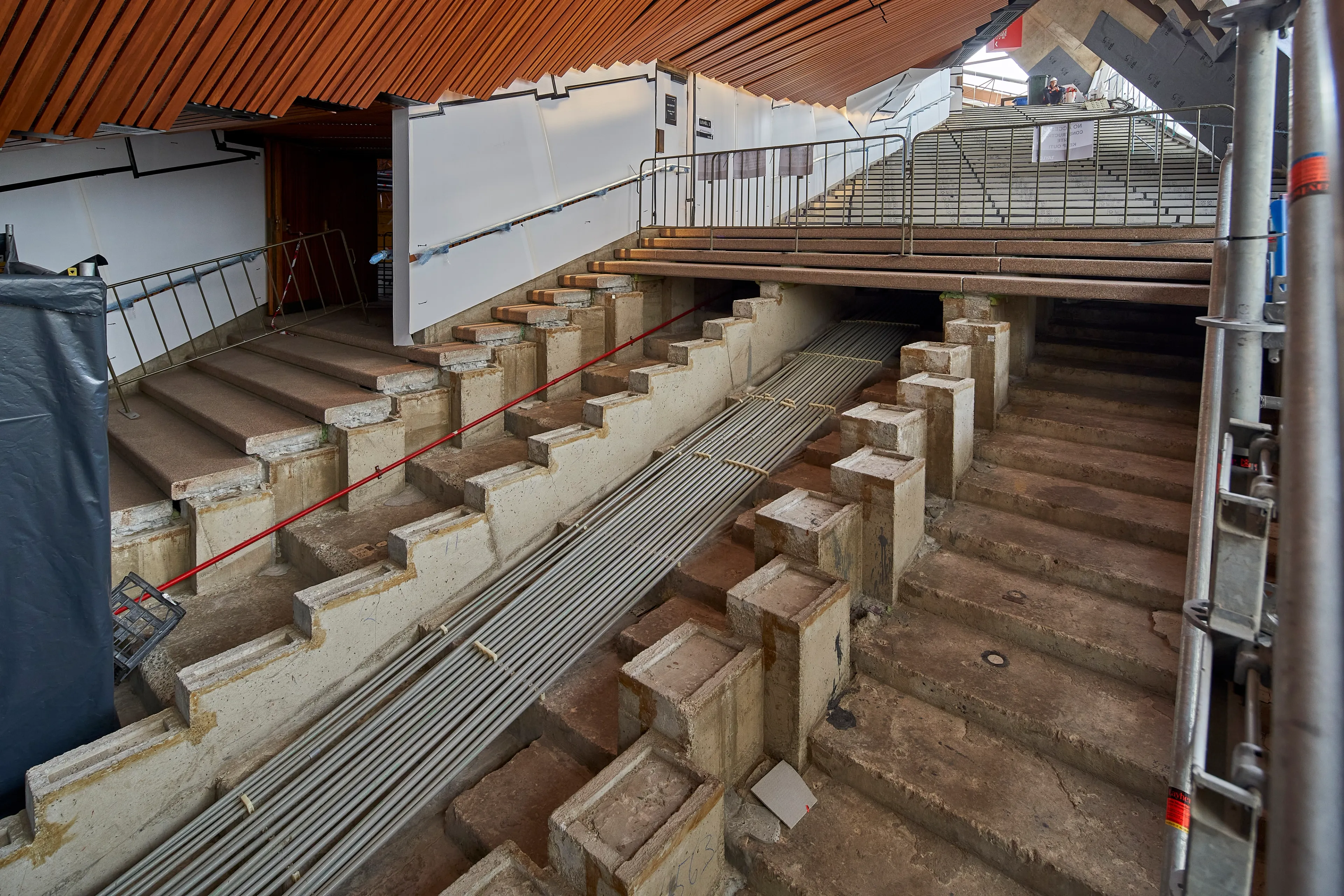
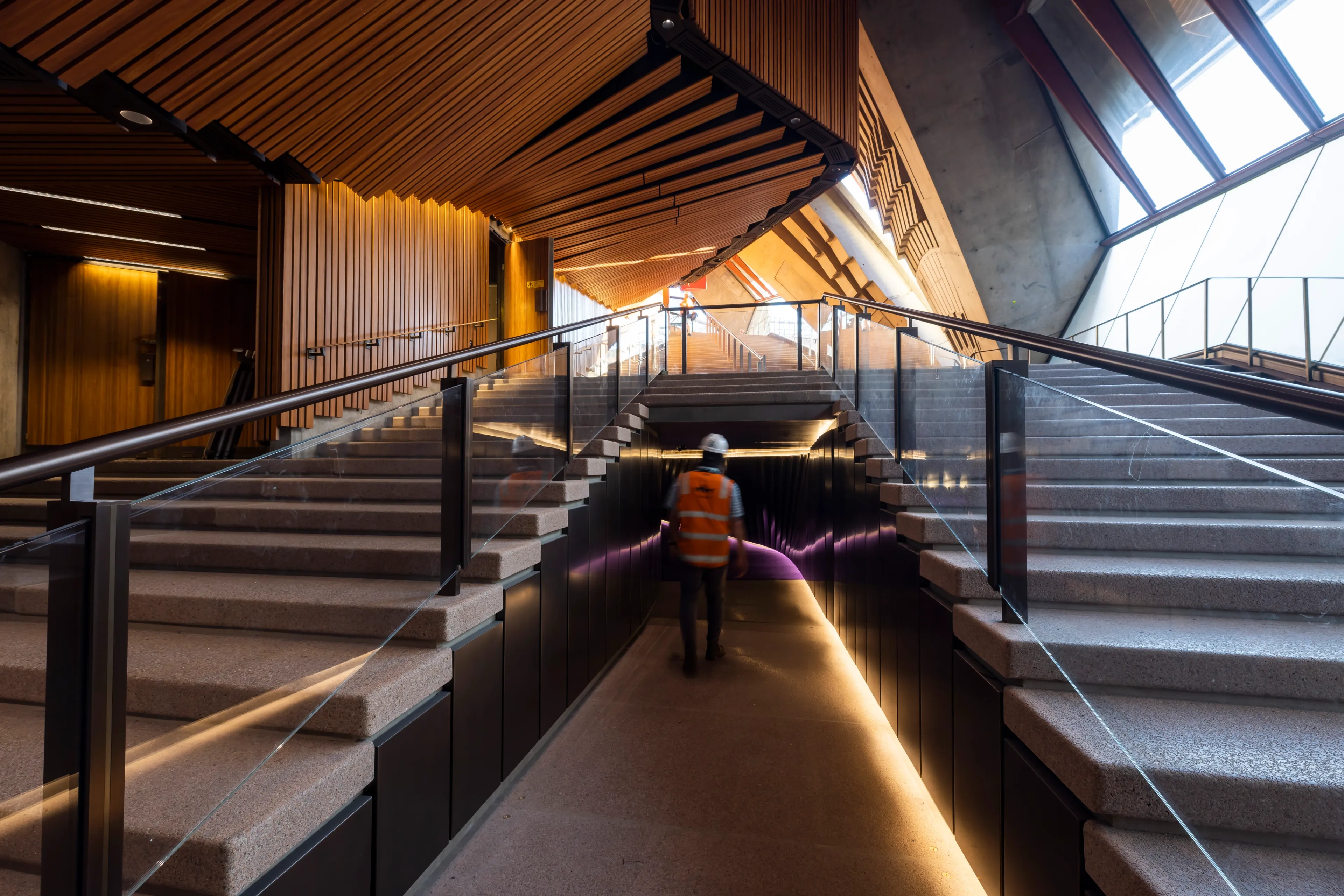
Cutting a tunnel directly through the original concrete structure was a particularly audacious move yet vindicated by Utzon’s drawings which revealed he had imagined a similar solution himself. This is what good adaptive reuse looks like – not simply preserving old buildings, but understanding how they work, what makes them significant and loved, and how they can continue evolving.
Making the room sing
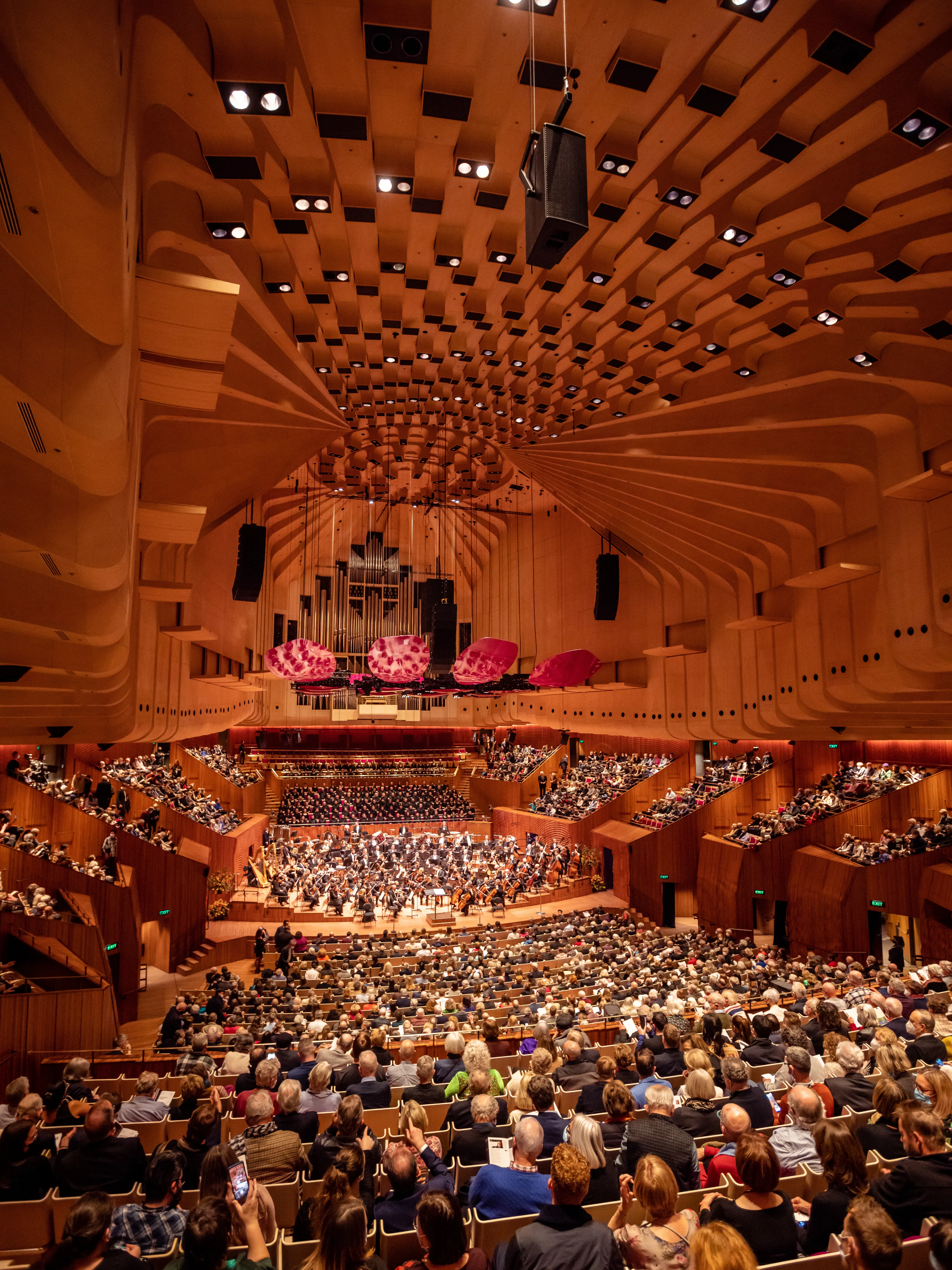
At the heart of the project was a remarkable acoustic transformation. The Concert Hall's enormous size had always presented problems. Sound could become lost in its height, reducing clarity and intimacy. Working with specialist acousticians, ARM developed new heavy brushbox timber reflectors, intricately machined with undulating, non-repeating patterns inspired by intersecting sound waves. These sculptural elements scatter sound throughout the auditorium, creating a warmer, richer and more equitable listening experience.
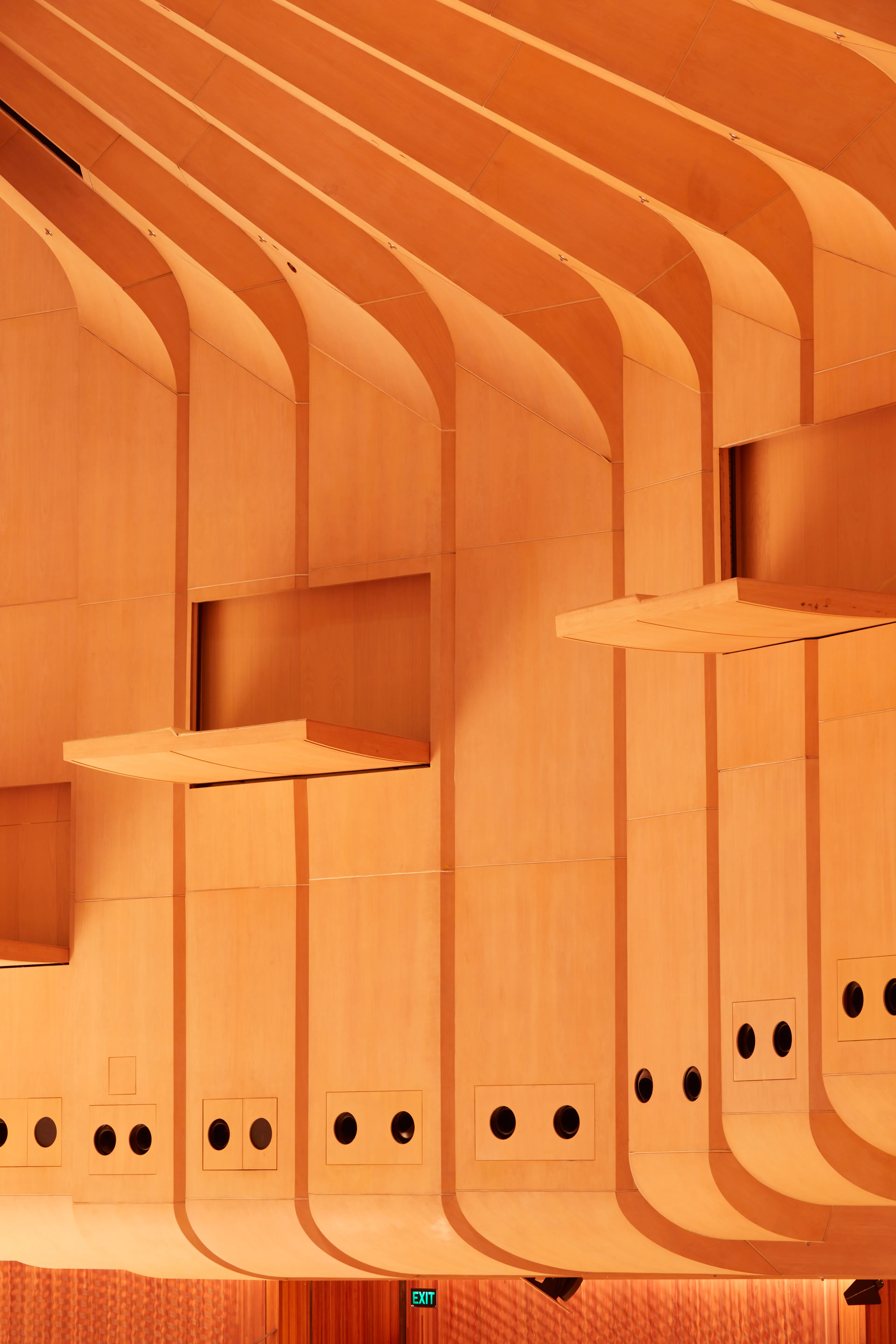
Finding coherence is responding sympathetically to what existed, and a delineation of what’s old and what’s new. The brush-box box fronts are an example of designing new systems in ways that mask what they do by how beautiful they are.
Retractable reflectors concealed within the original walls allow the hall to adapt between different performances. It's a compelling example of technology becoming architecture. Rather than filling the room with conspicuous equipment, ARM integrated new systems into its existing material and spatial language. The result is acoustically transformed, visually coherent and unmistakably the Sydney Opera House.
174 tonnes of steel. Some of it hot pink
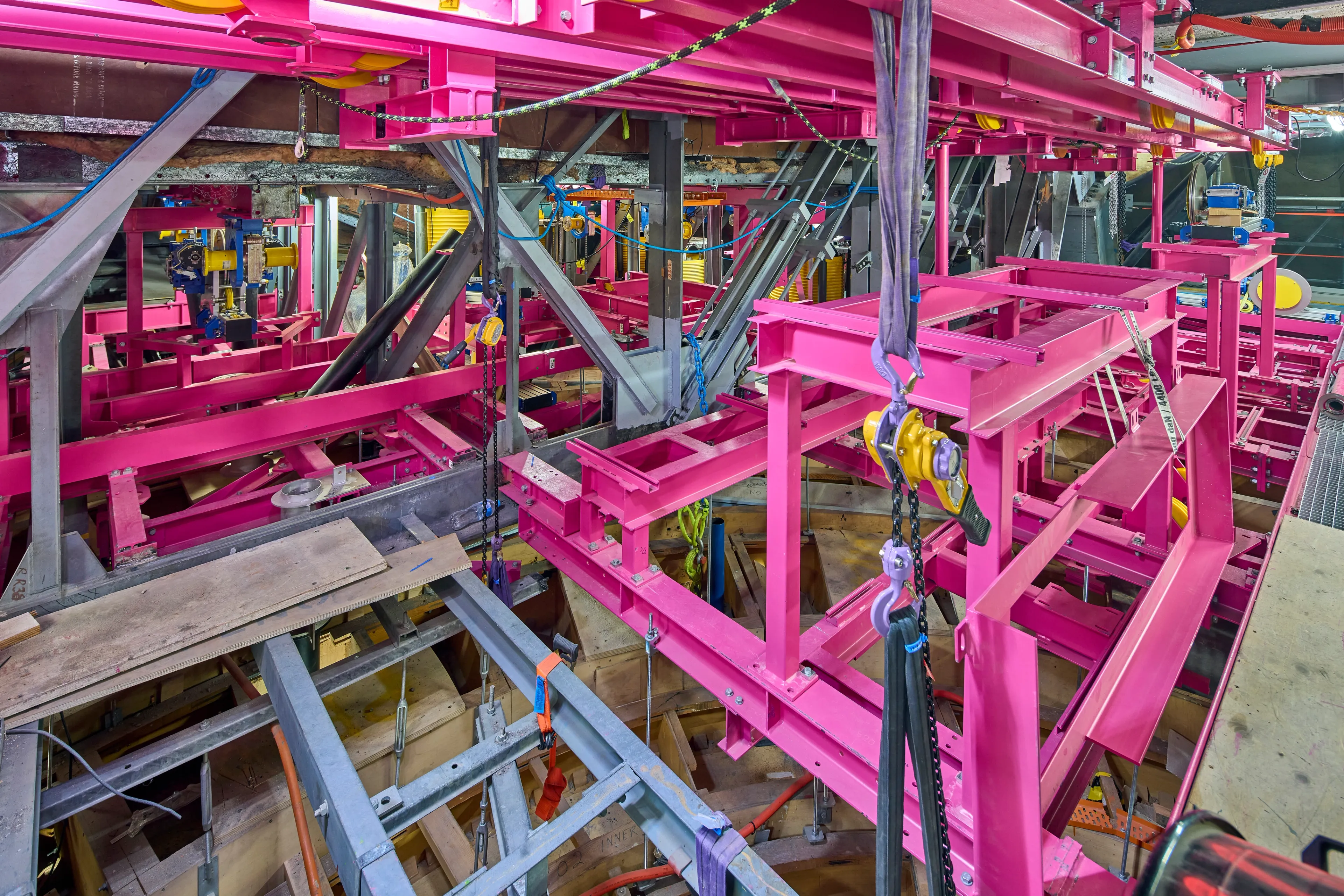
Behind the elegant timber interiors sits an extraordinary feat of engineering. The project introduced approximately 174 tonnes of new structural steel, including 44 tonnes painted hot pink to distinguish it from the heritage structure. The challenge? Suspending significant new theatrical equipment within a building whose iconic concrete shells weren't designed to carry additional loads. The solutions required painstaking coordination, inventive structural engineering by Arup and an exceptional degree of precision.
There were surprises, too.
At one point, a damaged sprinkler head unleashed a waterfall through the Concert Hall, sending water cascading through the recently restored organ. Narrowly avoiding a catastrophe, Mark reflects on a fundamental truth of architectural practice: something will always go wrong. What matters is how calmly and intelligently you respond.
Respect the past. Don't imitate it.
One of the project's most compelling lessons concerns authenticity. New bronze elements were deliberately left to age naturally rather than being artificially patinated to match their 50-year-old neighbours. Original materials were retained and reused wherever possible, including historic glass recovered from the Opera House's remarkable material stores. New interventions draw from Hall's architecture without pretending to be original. The objective wasn't to freeze the building in 1973. It was to ensure it remained relevant, functional and extraordinary for another generation. “The project is full of those decisions,” says Mark.
The best architecture isn't always new
The Sydney Opera House Concert Hall renewal makes a powerful argument for the value of working with what we already have. It demonstrates that conservation and innovation aren't opposing forces, a bold building requires bold responses. That ambitious technical transformation doesn't require conspicuous architectural intervention. And that understanding a building deeply can unlock possibilities that wholesale replacement never could.
For Mark, and ARM, the ultimate achievement isn't the extraordinary engineering, the acoustic technology or even the architectural detail. It's that the Concert Hall remains a great room. And now, it works better than ever.
“Sometimes the most radical architectural act isn't building something new. It's making something extraordinary even better.”
Watch and listen to Mark Raggatt in conversation with Cherise Lakeside on ARCAT's Detailed podcast: Acoustic design: Sydney Opera House Concert Hall Renewal