• Work
  • People
  • News & Ideas
  • About
  • Contact

National Museum of Australia
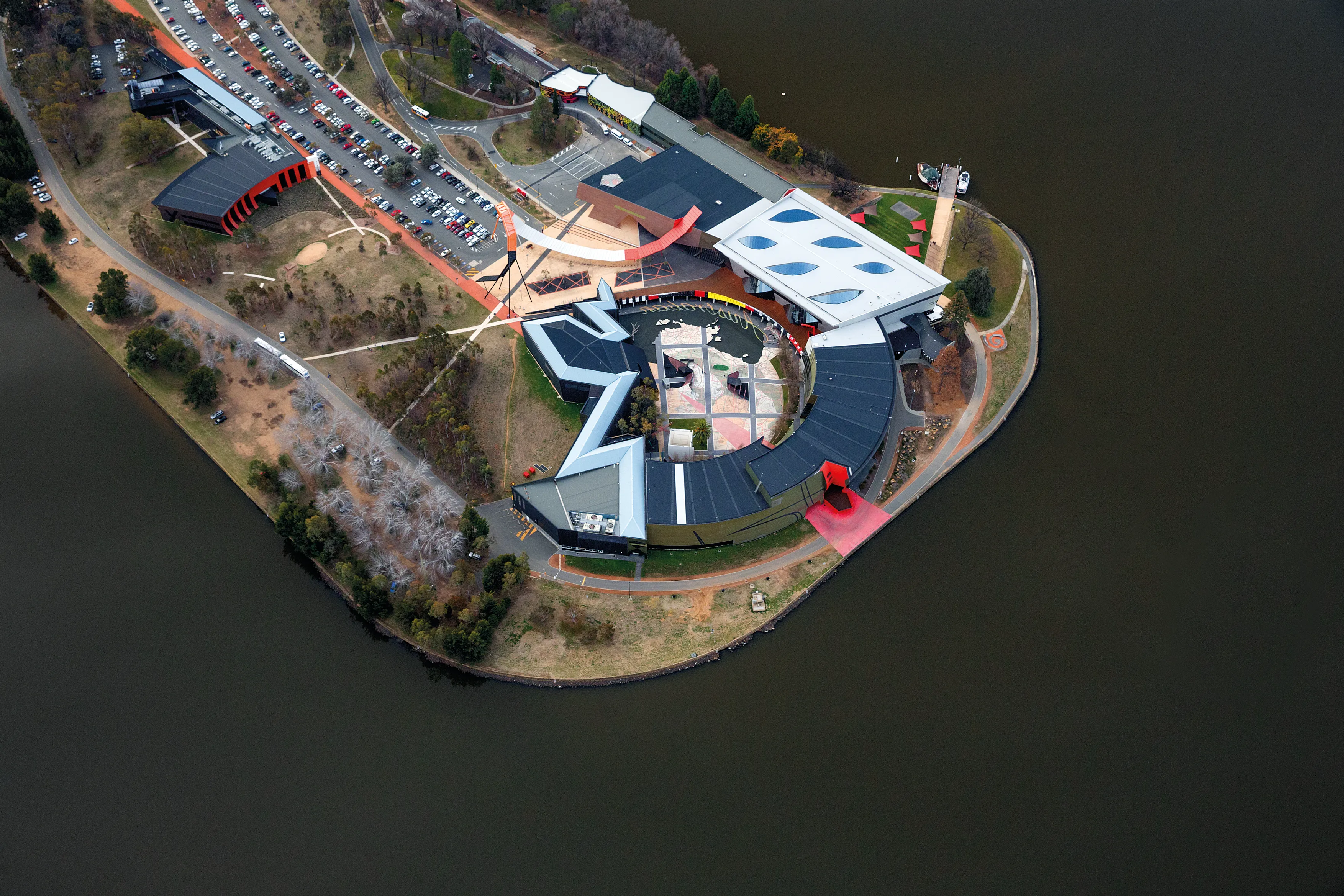
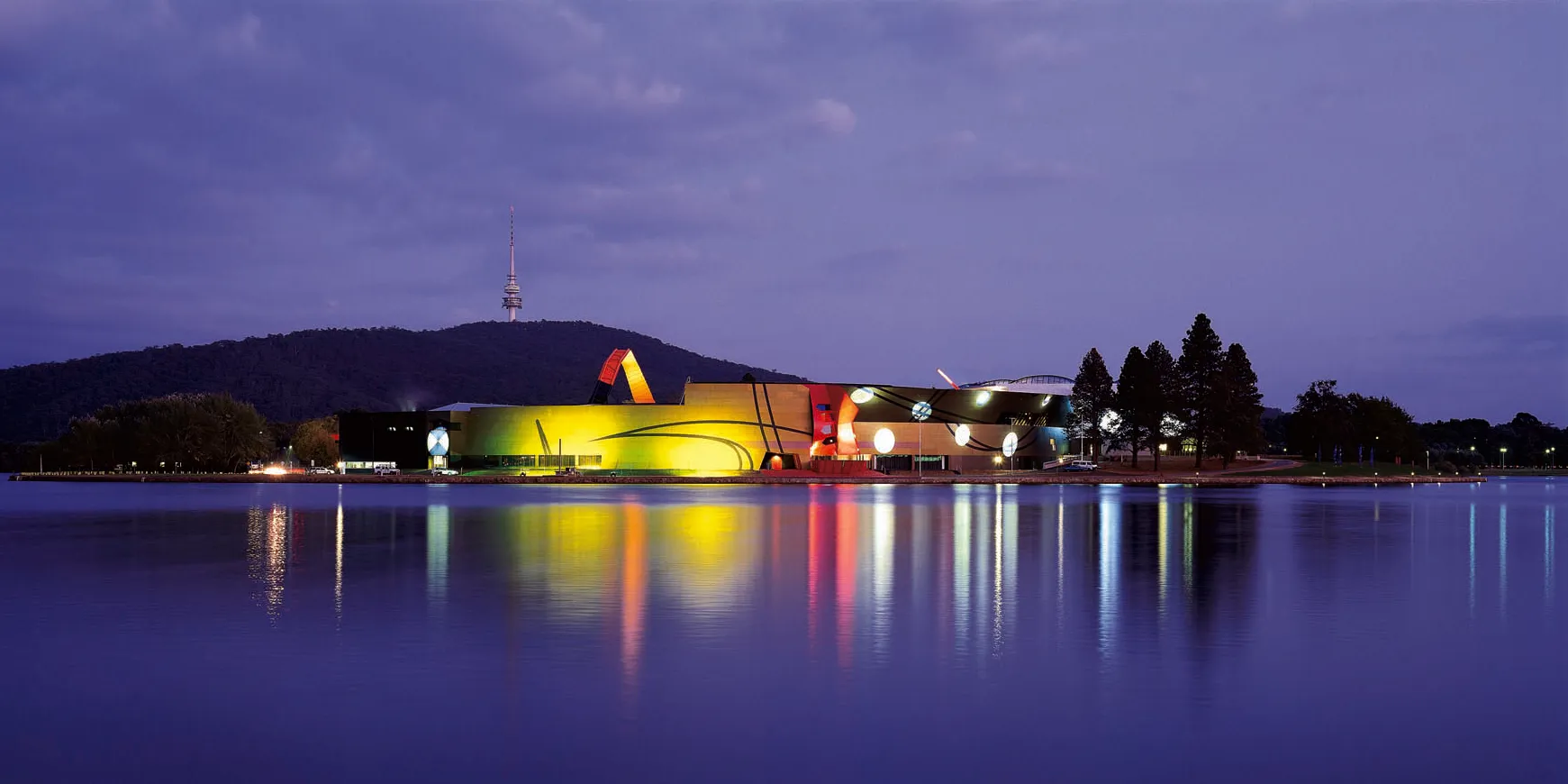
When ARM won the international competition for the National Museum of Australia in 1997, the nation was asking hard questions about what it meant to be Australian. In its answer, the NMA design keeps asking this, over and over. It’s a place to “bring to life the rich and diverse stories of Australia” and continues to be one of ARM’s most inventive, daring and controversial buildings.

Project Details

Traditional Owners:
Ngunnawal, Ngunawal and Ngambri
Client:
National Museum of Australia
Key People:

Howard Raggatt

National Museum of Australia

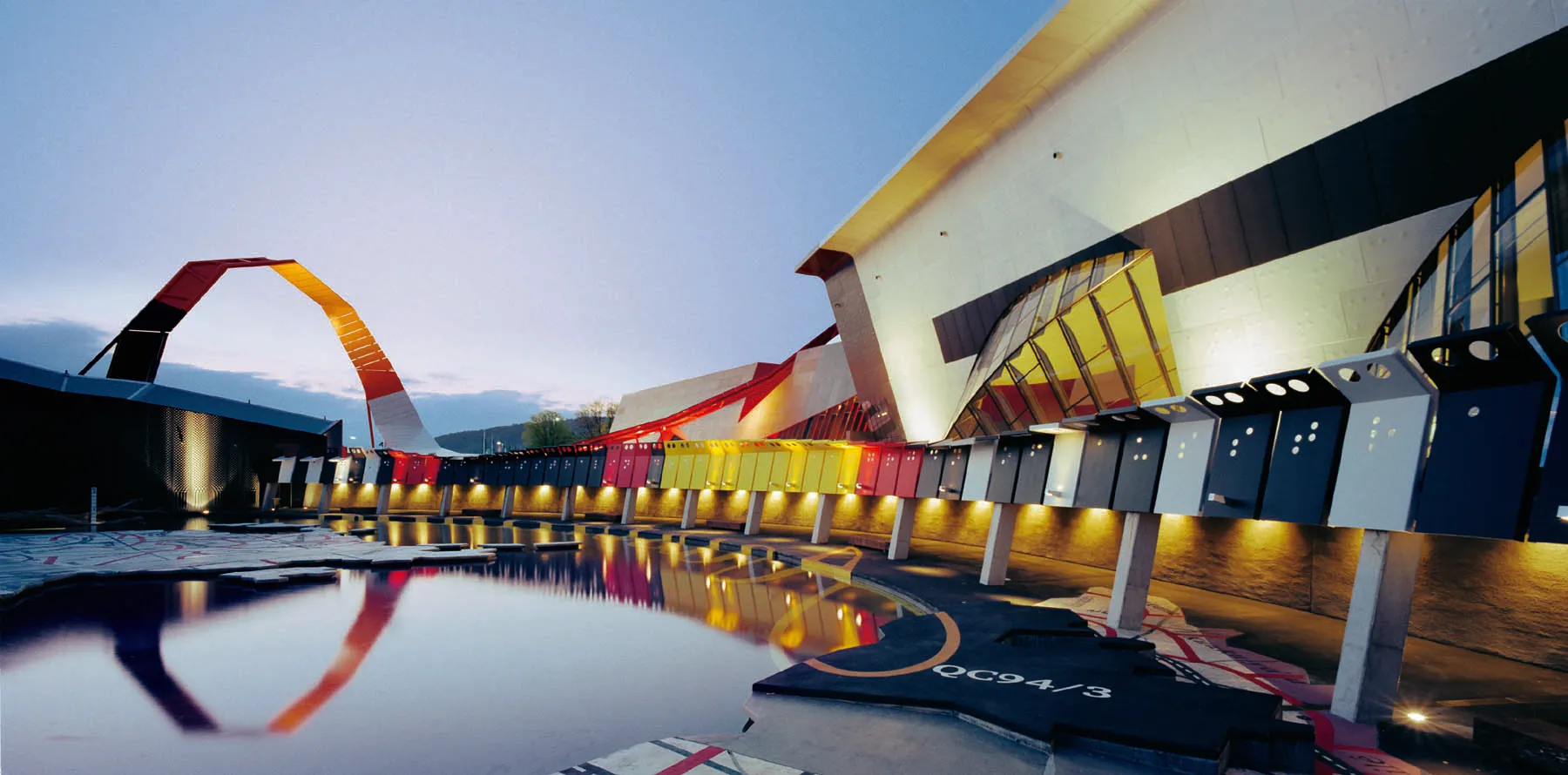
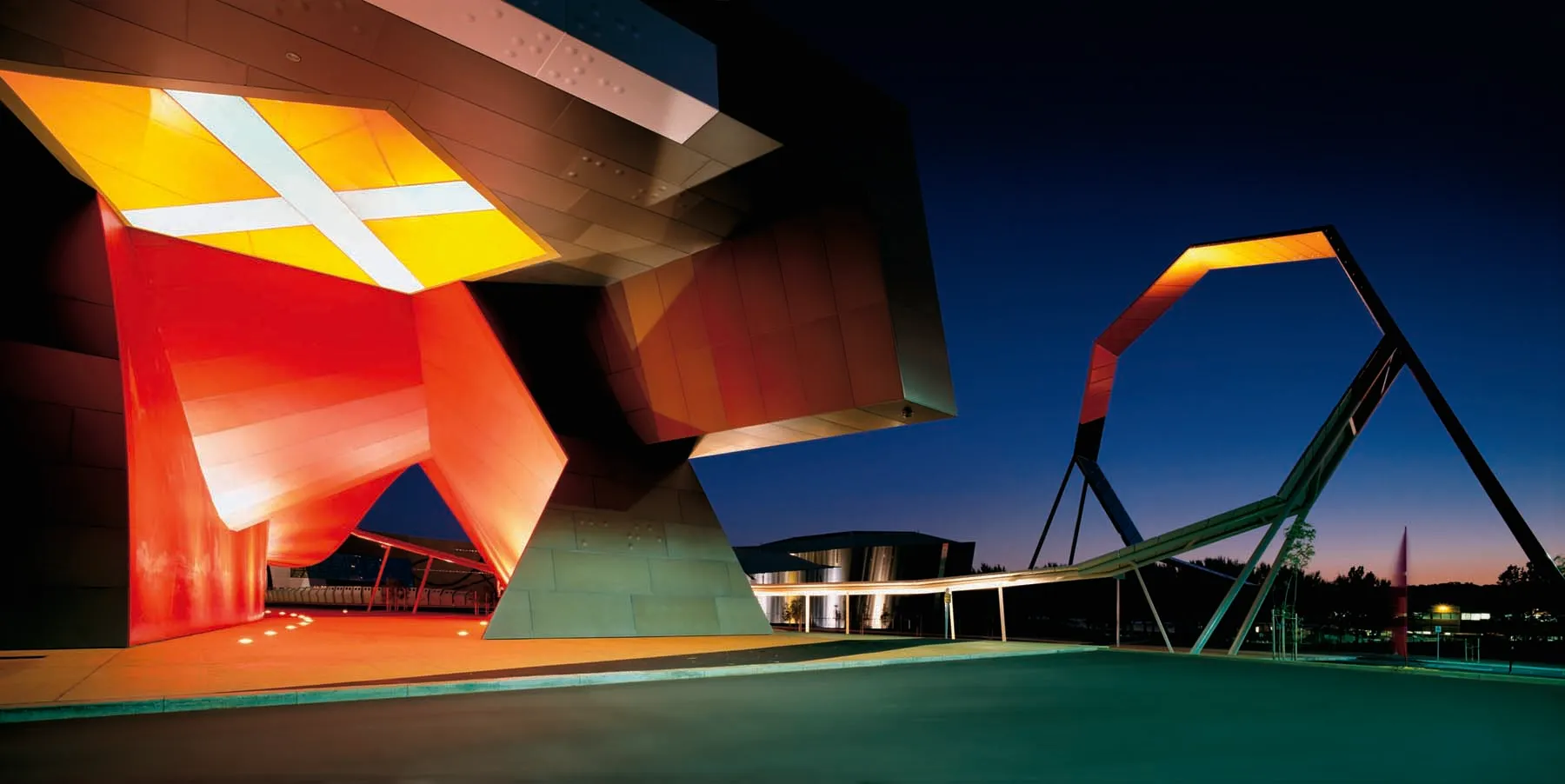
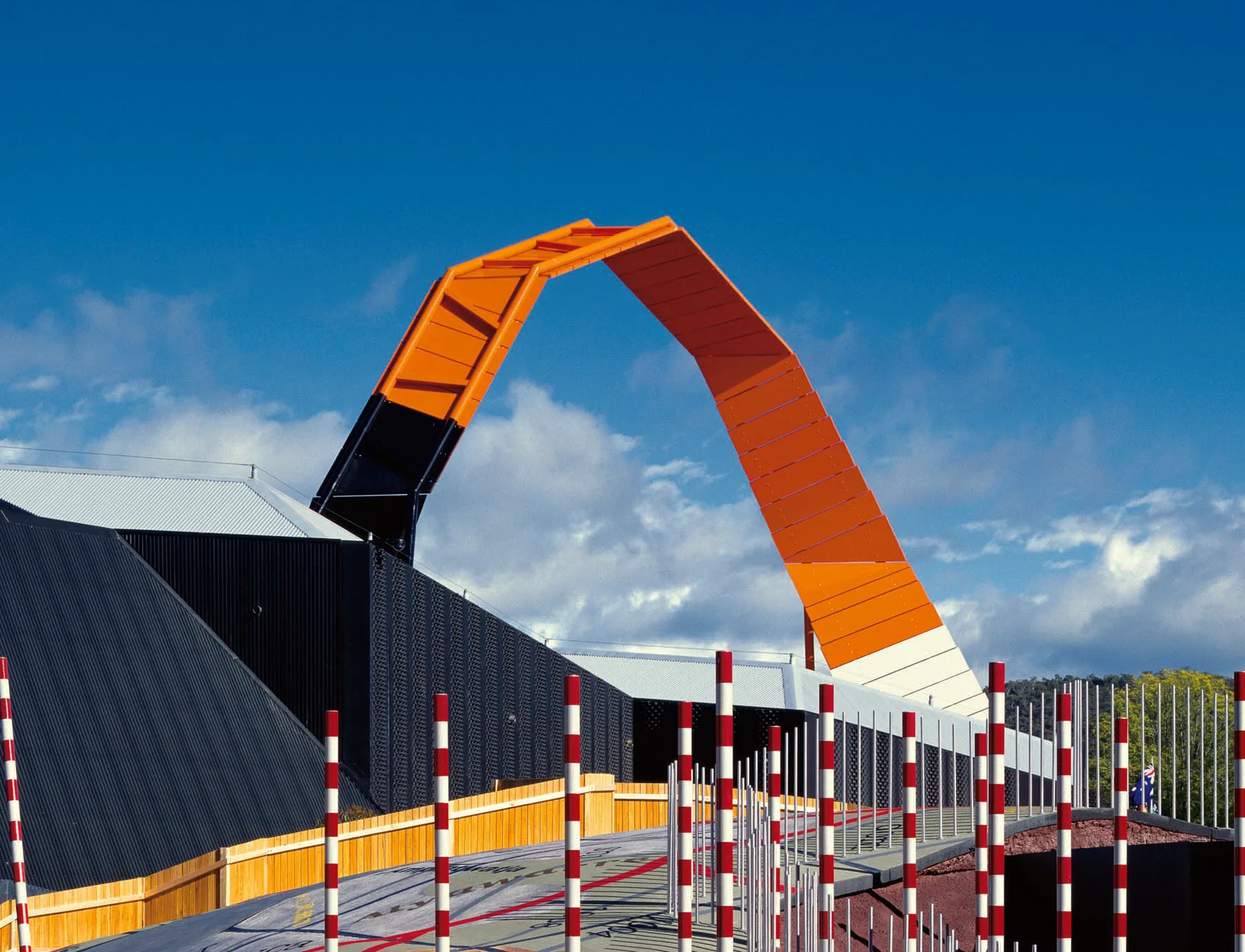
The National Museum of Australia was a flagship project to celebrate the centenary of Federation. The competition brief gave two axes across the site – a land axis and a water axis. ARM added a third: the Uluru Line. Most visible in the gigantic sculptural loop at the entrance, it points toward the continent's most sacred site, conveying that the story of Australia is not told by colonial geometry alone.

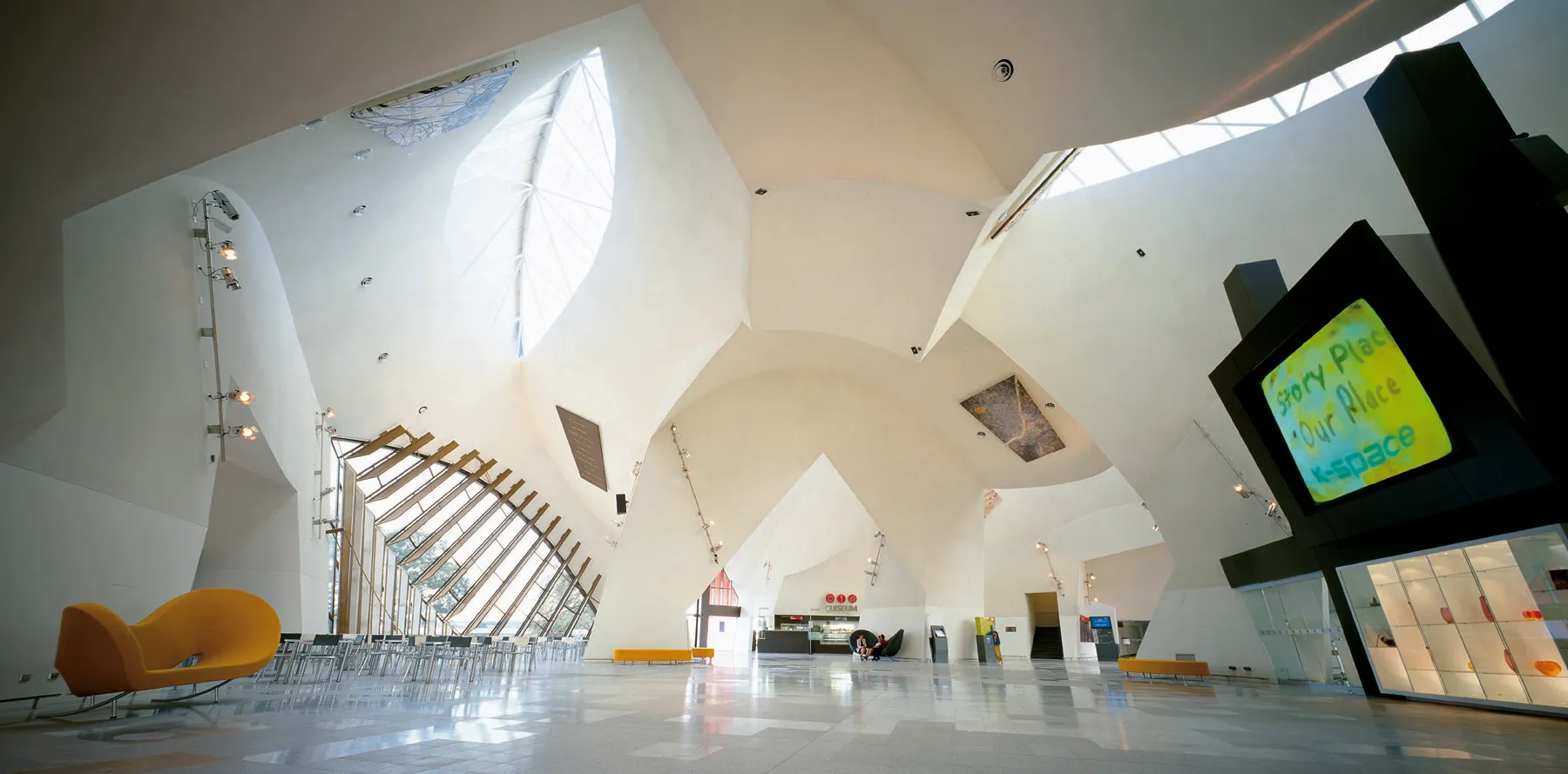
Rich with references to historical objects, events, and other famous buildings, the museum’s postmodern design is guided by two core ideas. The first is an imagined continuous line weaving through the building and across the site. It’s a design device we refer to as a Boolean string: it loops, twists and knots around the museum, becoming visible as architecture and disappearing again. It symbolically entangles the three axes, creating forms such as the knot above the Main Hall and the sweeping loop of the forecourt. It signifies Australian history as layered, contested and incomplete: the closer you look, the harder it is to untangle.

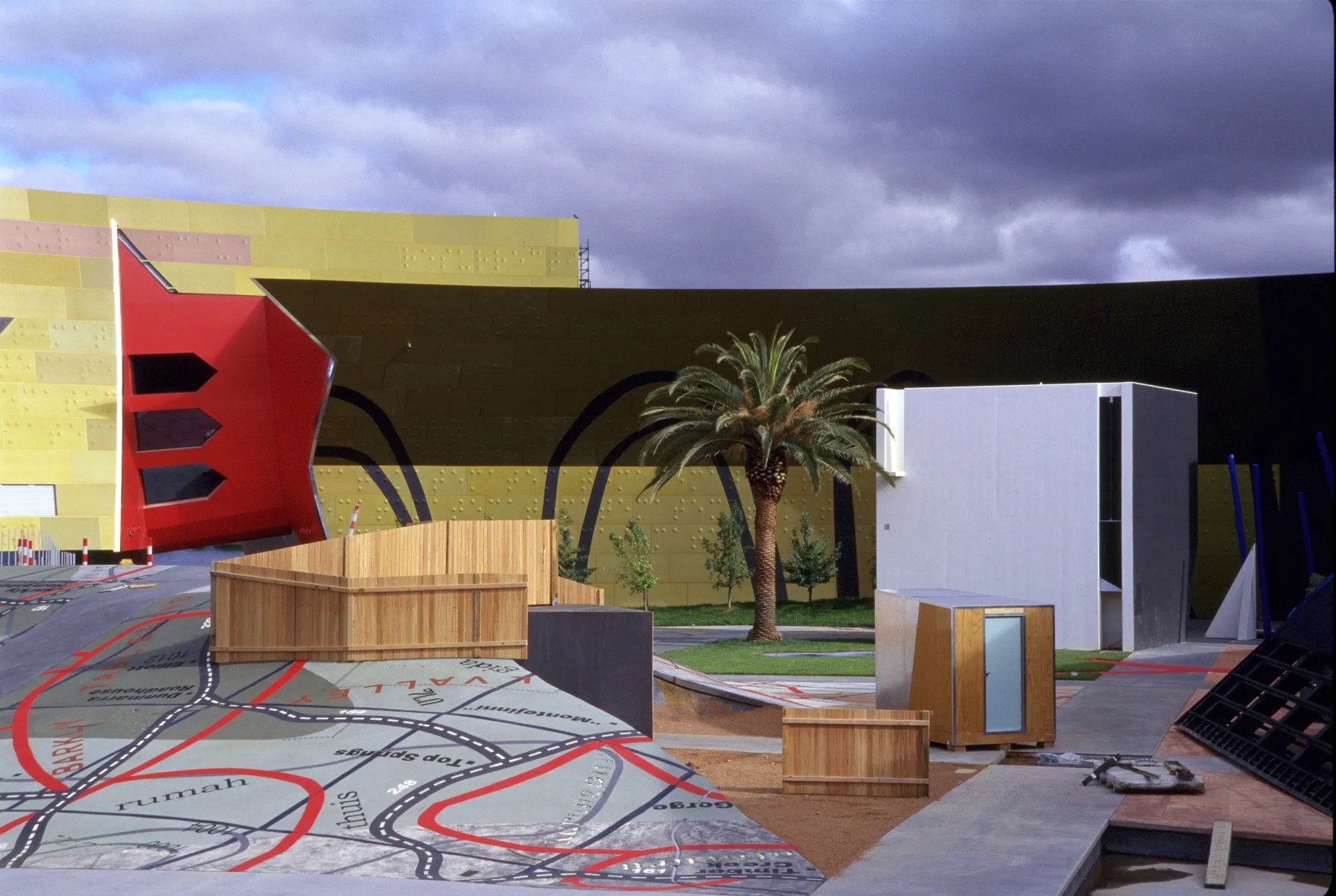
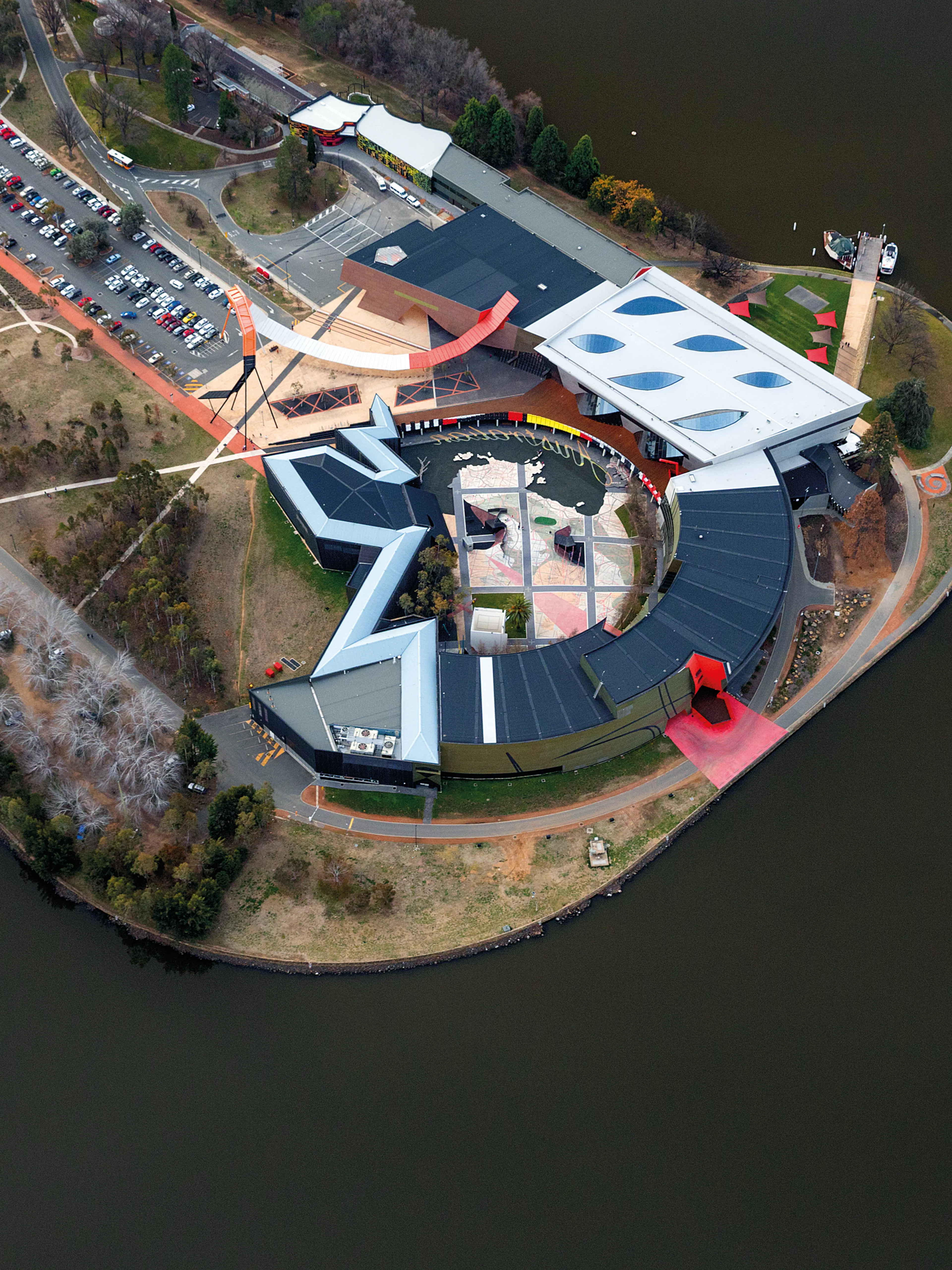
The second is the jigsaw puzzle: a composition of distinct geometric forms, clad in different materials, expressing the idea that Australian history is made up of many separate and sometimes conflicting pieces. The pieces form an incomplete circle around the central Garden of Australian Dreams which extends the museum’s exploration of national identity into a landscape symbolising that our national beliefs and values are, themselves, unfinished business.

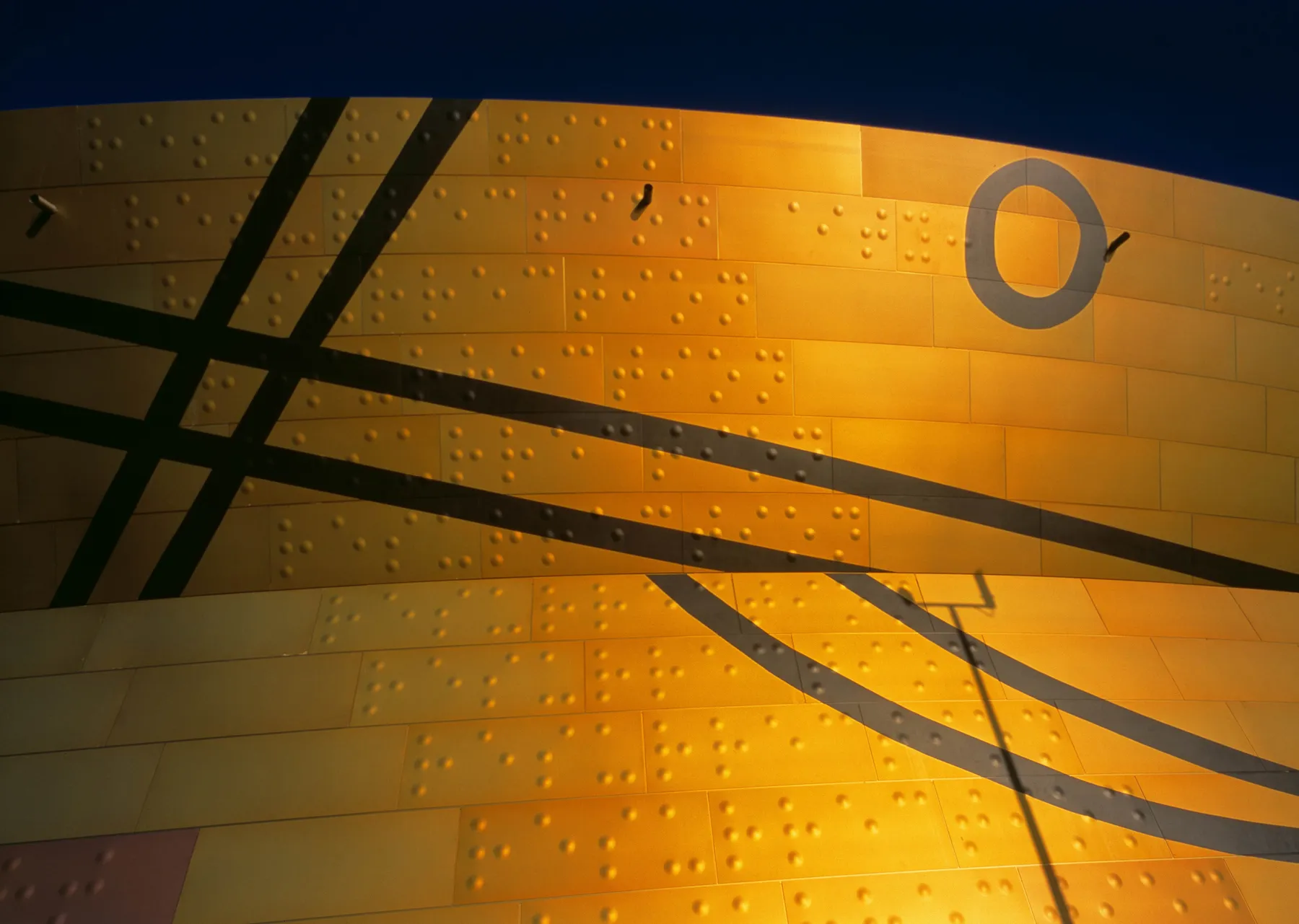
Hidden stories reward close attention. The word Eternity is written on the façade (a nod to Arthur Stace’s chalk graffiti on Sydney streets). Braille runs across surfaces – its content, when the Howard government saw it, quietly redacted. Blue poles stand in the Garden of Australian Dreams as a subtle reminder of the importance of resisting censorship and inappropriate political interference in cultural institutions.

The National Museum is a work in progress towards the articulation of the Australian experience that evolves over time. ARM continues to support the museum’s need to respond to contemporary public expectations and technologies, and offer new reasons for regular visitors to return. The Workplace Wing (2013) is a new puzzle piece that slots neatly in between existing ones; the Café is a pentagonal tube – the end of the Boolean string sticking out of the building. Our masterplan revision (2017) identified projects to be realised by 2030. The landscaped Forecourt was the first of these, followed by the Life in Australia Gallery and the Children’s Discovery Centre.

Project Collaborators

Robert Peck von Hartel Trethowan
Richard Weller and Vladimir Sitta of Room 4.1.3

Awards

  • State Award - Public Architecture, Australian Institute of Architects
  • State Award - Interior Architecture, Australian Institute of Architects

Related

News

Happy 20th Birthday National Museum of Australia

Work

National Aquatic Centre

News

Construction underway for East Perth Primary School

Ideas

Beyond the Bed Count: What Great PBSA Should Actually Do

More

  • Work
  • People
  • News & Ideas
  • About
  • Contact

Keep up to date

  • Instagram
  • LinkedIn
Design By Lachlan Siu & Development by Cameron Askin