Access is not Independence
13 November 2026

Nick Morris OAM PLY on dignity, dodgy shoulders, swimming pool ramps and why architects need to become activists.
Architecture shapes how we live, move and participate in the world. ARM's Cultural Conversations series brings people from beyond the profession into the studio to challenge assumptions, share experiences and stir things up. Our latest guest, Paralympic gold medallist and access consultant Nick Morris OAM PLY, didn't disappoint.
Nick had a simple message: getting someone int and out of a building is one thing. Letting them get on with their life is another.
Nick was once bulletproof. An elite wheelchair basketballer, Paralympic champion and fiercely independent, he could do almost anything he put his mind to. Nearly four decades in a wheelchair have changed a few things. He's now 55, has a dodgy shoulder and occasionally gets a push from his kids. For commuting, he's rigged up a rather cool electric scooter attachment to his carbon-fibre wheelchair: “practical, fast and, frankly, pretty good fun”. But a recent operation brought a less entertaining prospect. When hospital staff asked if he'd need a nurse to go home with him to help with toileting, Nick had a moment of reckoning. "Oh my God, this is not going to get better before it gets worse." It's funny because of how bluntly he tells it. It's confronting because he's right. "My dignity has changed significantly in 30 years."
Which is our architectural problem. We design for disability as though it's a fixed condition. But people change. Bodies change. Independence changes. How do buildings and places keep up?
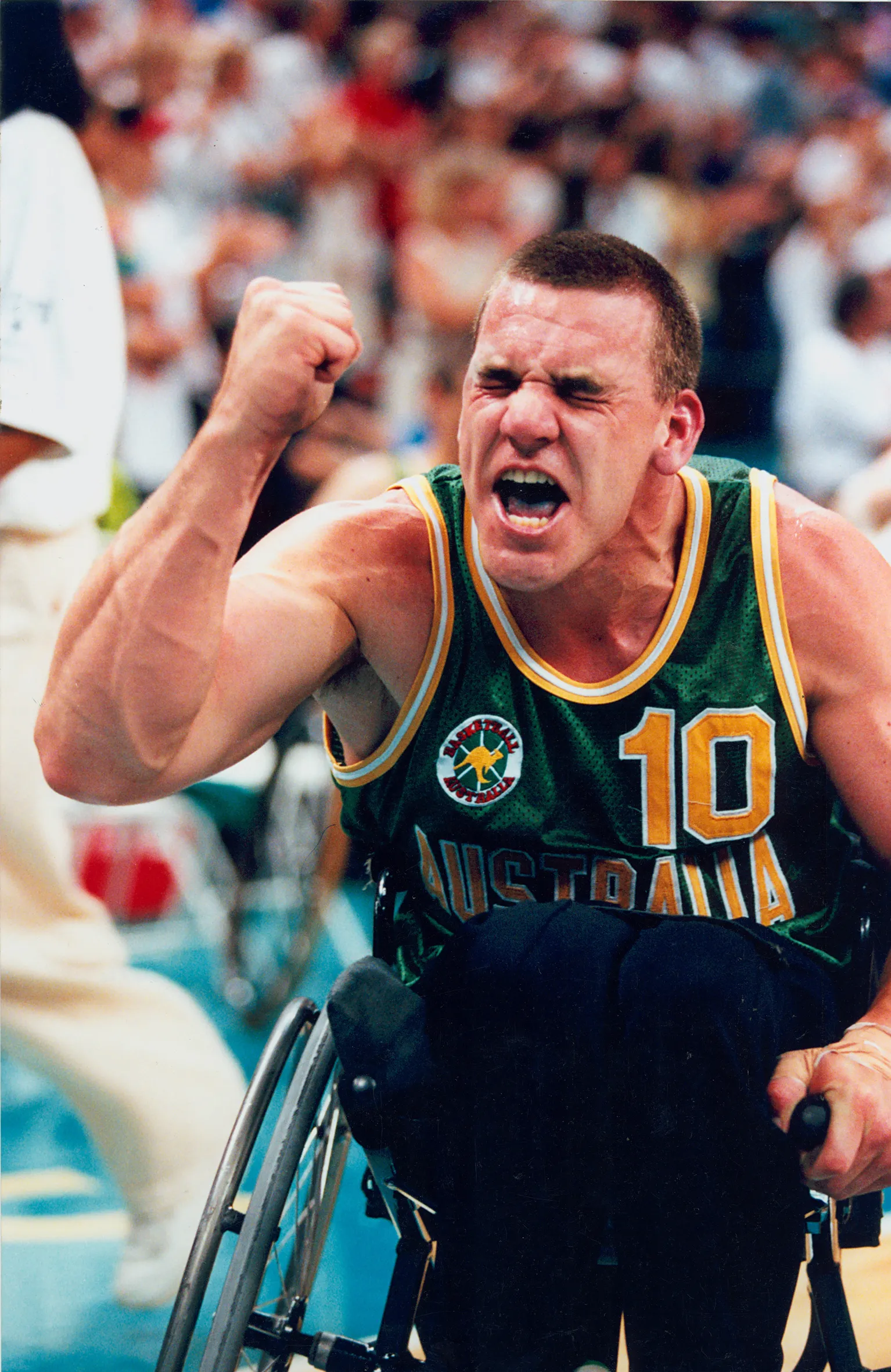
Nick won gold with the Australian men's wheelchair basketball team (the Aussie Rollers) at the Atlanta Paralympic Games, 1996
Independence is the point
Nick won gold for Australia in wheelchair basketball at Atlanta in 1996. Since then, he's built an international career advising on accessible environments, including major Olympic and Commonwealth Games projects. He knows the regulations inside out but, more importantly, he knows what happens when a technically compliant solution meets real life. He’s not arguing against the need for accessibility standards – “they're essential” – but make them the starting line, not the finish. A compliant bathroom can make assistance awkward or undignified. A building can tick every box and still be a thoroughly miserable experience for someone trying to use it. There’s no point having a huge door with loads of clearance if it’s impossibly heavy to open. The issue isn't simply whether people can use a space. It's whether they can use it on their own terms, with as much independence, choice and dignity as possible.
And there’s no tick box for that.
When the ramp is the problem
He made the point with a beautifully ordinary example: getting into a swimming pool. A pool ramp seems an obvious accessibility solution. But for Nick, it means transferring out of his wheelchair into an aquatic wheelchair, getting somebody to push him into the water and then having to summon them back when he's finished. "Hey Bob, I'm finished, can you bring the chair back?" Accessible? Sure. Independent? Not remotely. He'd rather use a pool hoist. "I wheel over to it, I jump onto it, I zoom myself down, I go, I come back, I'm onto it, I'm out of there." Problem solved. No waiting, no negotiation, no Bob. And the hoist might also be perfect for someone recovering from hip surgery or an older person who finds steps difficult. Different people, different circumstances, same intelligent solution.
Nick also recalled an aquatic wheelchair that floated rather than sank, leaving him halfway down a pool ramp, stubbornly buoyant and going nowhere. "Oh, it's terrible." The story got a laugh, and it landed his point: the ramp isn't necessarily wrong, nor is the hoist universally right. What matters is understanding how people actually use things.
Providing access doesn’t always deliver independence. They're not the same thing.
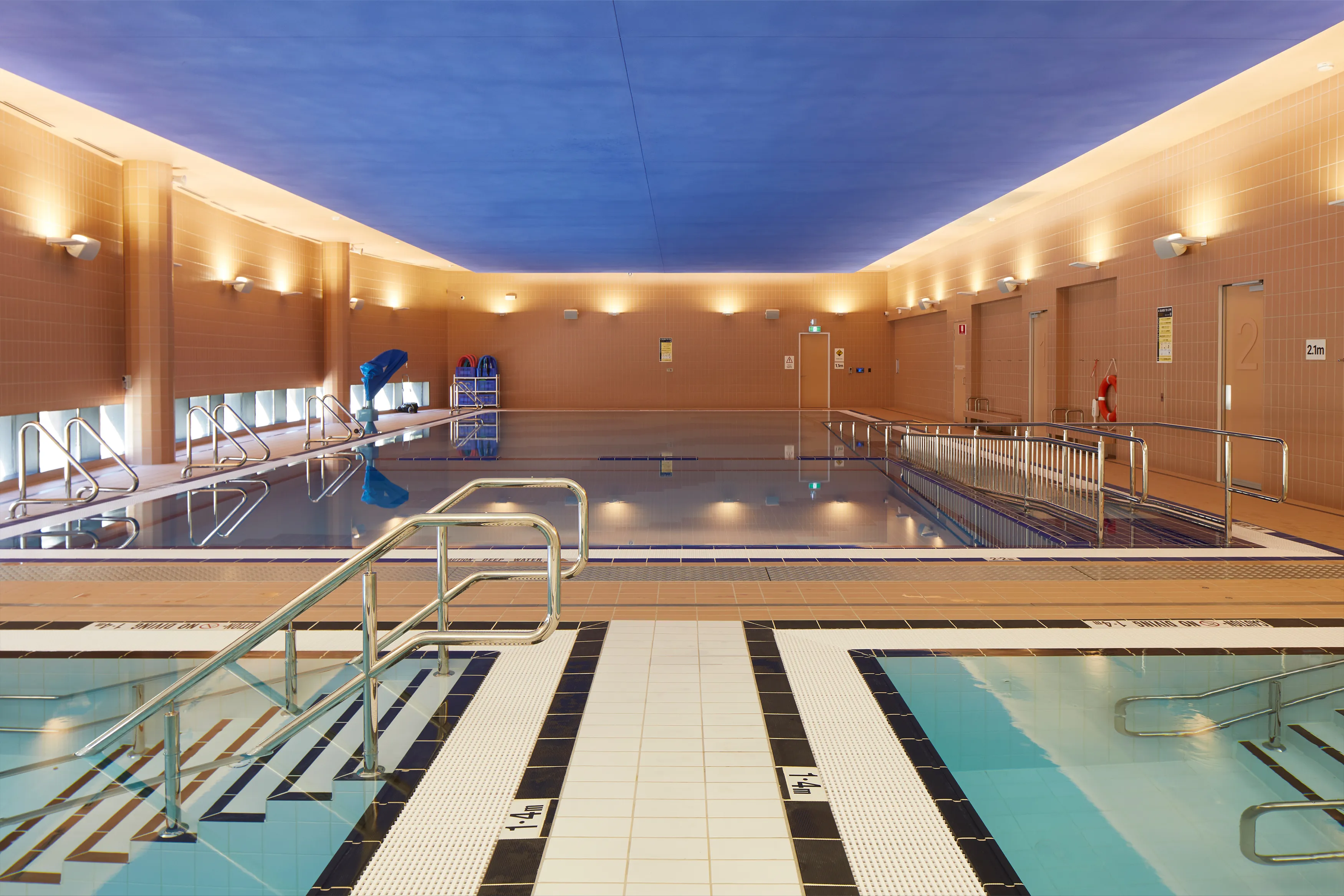
The aquatic recovery pool at Blacktown Exercise Sports and Technology Hub by ARM.
On dignity
Getting older has made Nick rethink how assistance, privacy and personal dignity relate. Activities that were once straightforward are becoming harder. His needs are changing, and so are the people helping him. "We never know who's going to be helping us." It's a persuasive case for universal and all-gender facilities, and for environments that accommodate carers, partners, family members and circumstances we can't always predict. It's also a reminder that disability isn't a neat architectural category. Neither are ageing, neurodiversity, dementia or cognitive impairment. Human beings are gloriously inconsistent. We don't arrive in standard sizes, with standard capabilities, and remain that way for life. The answer isn't a bewildering collection of specialist solutions for every conceivable condition. It's better thinking, informed by people with different experiences, built into the design from the beginning.
Dignity is what happens when the building actually works.
Compliance is hardly ambition
Architects love a standard. A dimension, a gradient, a clearance, a neatly annotated detail. We can demonstrate compliance with extraordinary precision, then forget to ask whether the result is any good. Nick’s challenge is to reverse that thinking. Start with the person, not the regulation. Understand what they're trying to do, what's getting in their way and how design might make their life easier. Refuse to confuse the minimum acceptable outcome with the best possible one.
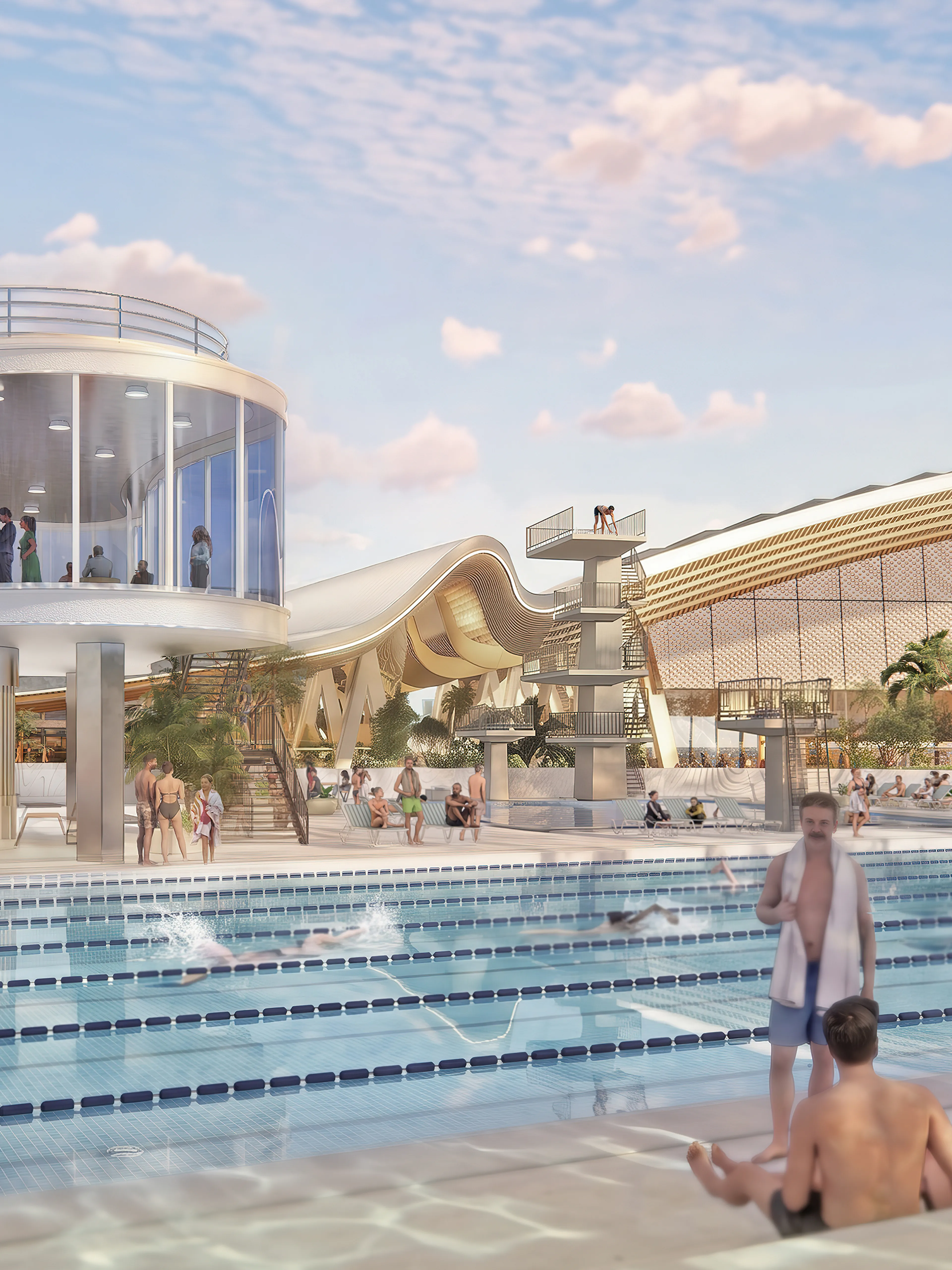
Nick brings this thinking to ARM's work with Arkhefield and NH Architecture on the National Aquatic Centre for Brisbane 2032. The Olympic and Paralympic Games projects are an opportunity to create genuinely inclusive public infrastructure, not simply compliant sporting facilities. Their real success will be measured long after the medals have been handed out, by the communities who use them every day.
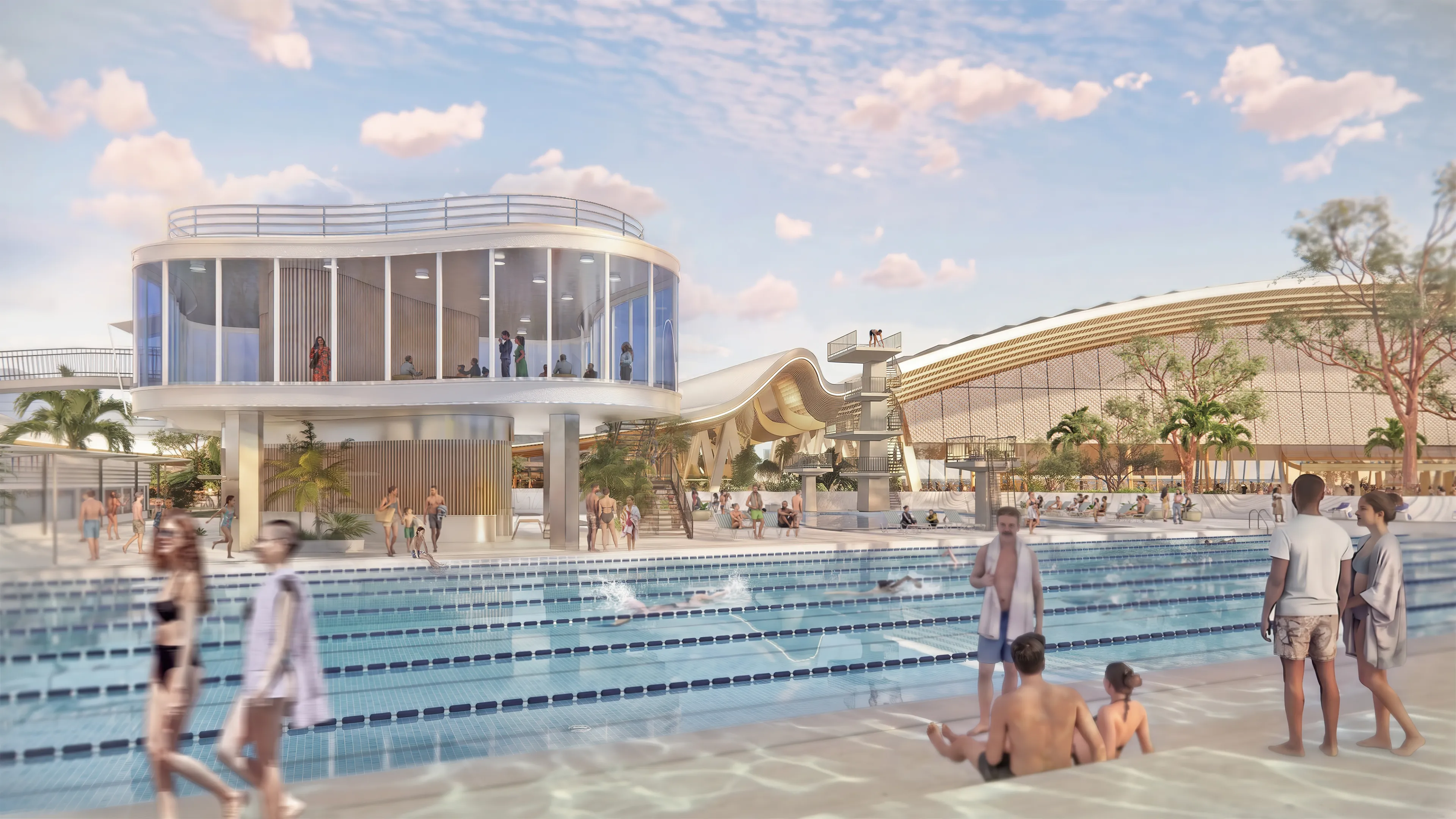
Early concept design of the National Aquatic Centre, Brisbane (ARM Architecture, Arkhefield and NH Architecture)
Architects. Activists. Champions.
Nick finished by throwing us an imperative to make architecture make sense. "Any of us can be an activist." Challenge an inadequate brief. Push for better evacuation provisions. Make the case for people whose needs aren't being considered. Don't wait for permission to have an opinion. He pointed to people in the room already advocating for change and urged the rest of us to follow. "I'd get more of you guys as champions."
There's something refreshing about Nick's approach. He's not asking architects to save the world, nor does he expect architecture to eliminate every barrier. He's asking us to think differently, listen better and use the considerable influence we have. His message is more practical, and more demanding, than simply making buildings accessible: maximise independence where you can, preserve dignity where assistance is needed, and never mistake compliance for success.
He’s not quite as bulletproof as he once was. But Nick’s determination, humour and appetite for challenging the status quo are clearly intact. And if that means fewer pointless ramps, more genuinely useful buildings and a few more architects prepared to make some noise, so much the better.
We’re eternally grateful for Nick’s honesty, putting his own lived experience and dignity into the frame to teach us all how to do a bit better each day.
Access is a requirement. Independence is the ambition.
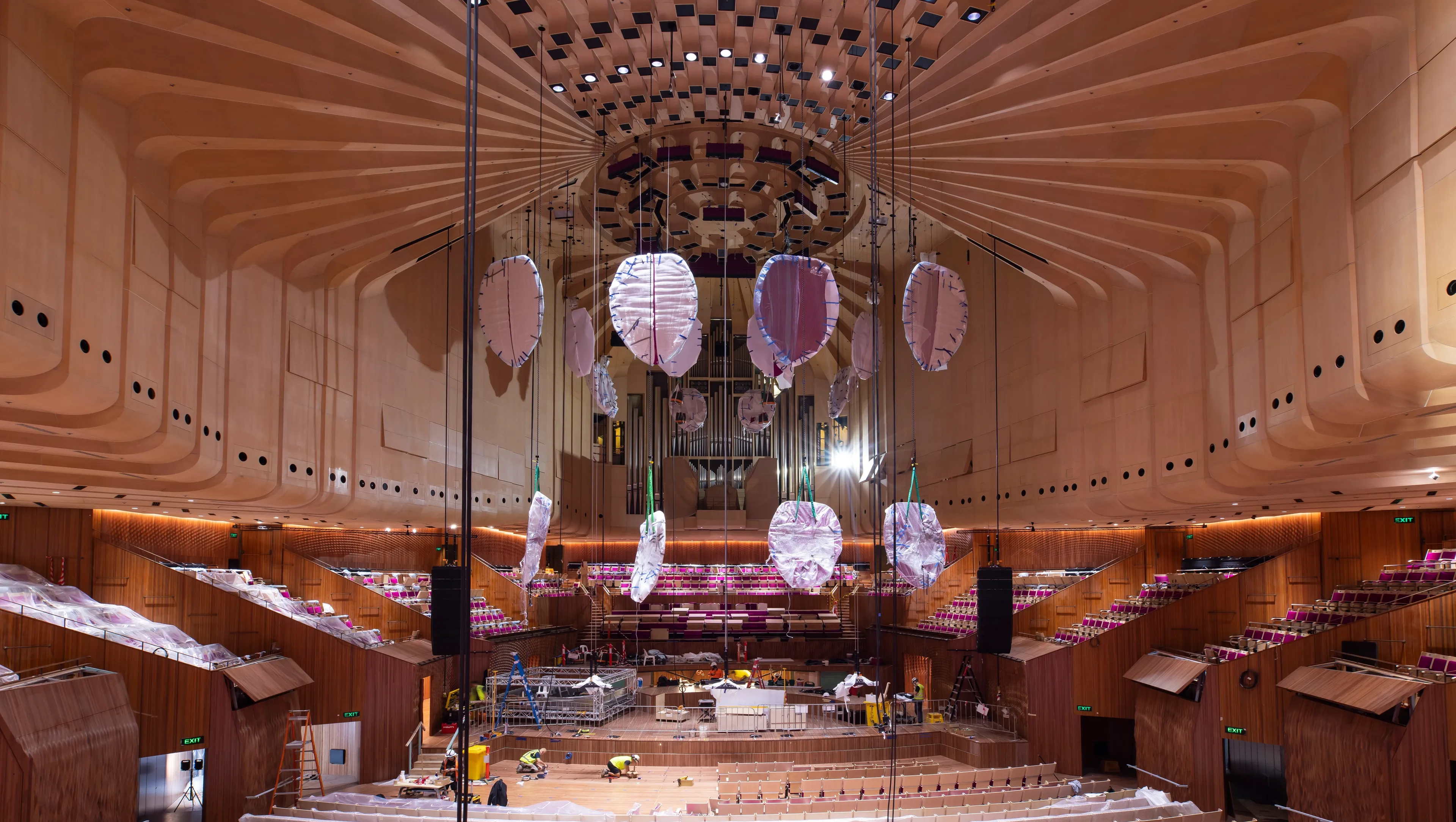
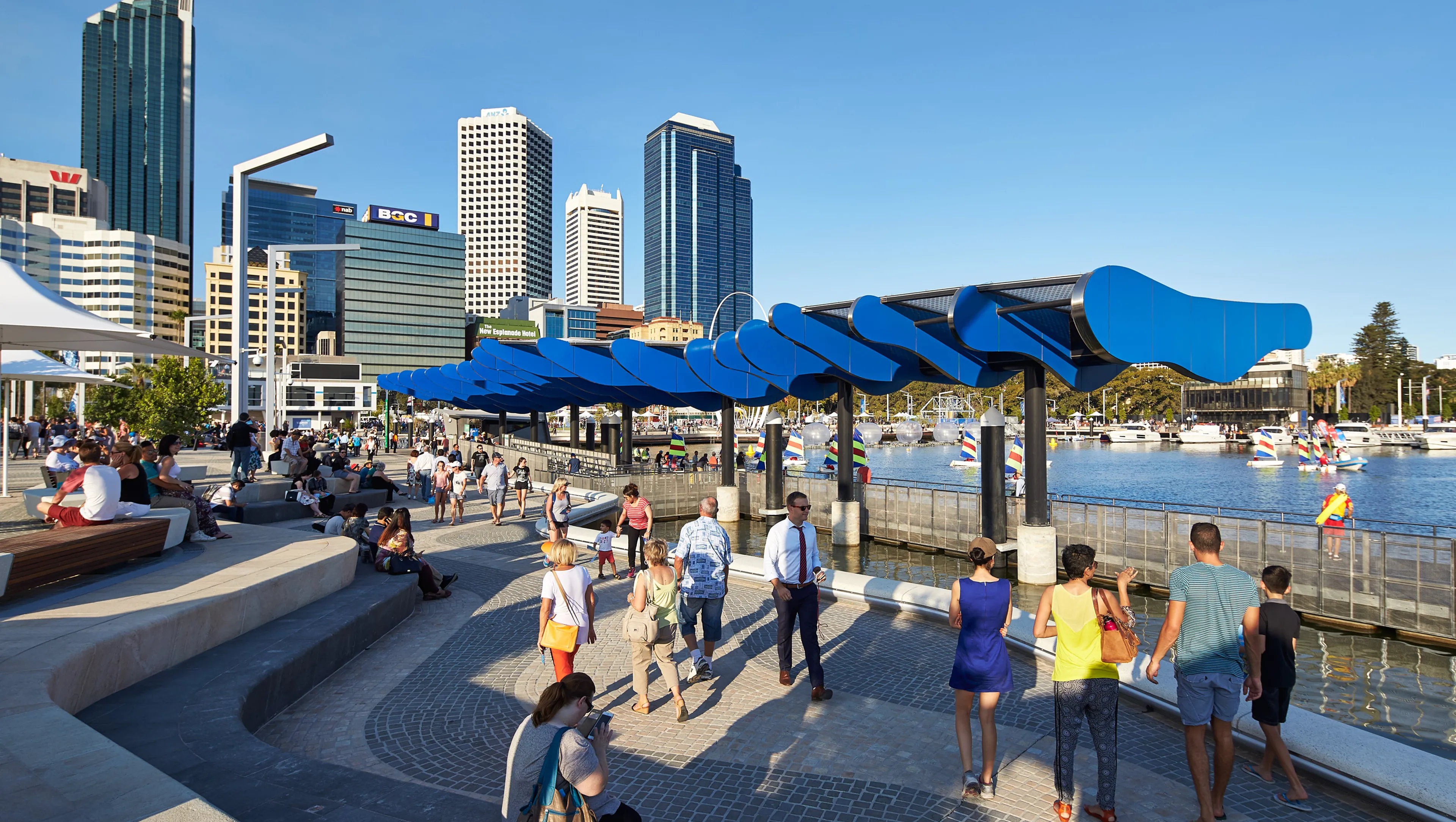
Nick Morris OAM PLY was in conversation with ARM principal Aaron Poupard, who has spent his career on big public buildings, from RAC Arena and the Hamer Hall redevelopment to the HOTA Gallery on the Gold Coast. Aaron is a project leader on the National Aquatic Centre, where getting past code-minimum access is a question the team is dealing with right now.